

Hartford, Connecticut
The Birthplace of an American Idea
Welcome to New England and to the state of Connecticut, a region often described as the Birthplace of America. The ideas, industries, and institutions that would define Connecticut were already taking shape long before the United States existed as a nation.
Connecticut was the fifth colony to ratify the U.S. Constitution and the first from New England to join the Union. Its geography played as much a role in its destiny as its people. With over 100 miles of coastline along Long Island Sound, the state developed a powerful maritime identity. Inland, rolling hills and river valleys framed the classic New England landscape—defined by seasonal beauty and economic opportunity.
At the center of the state flows the Connecticut River, a 400-mile artery stretching from Canada to the Atlantic. This river carved fertile valleys, divided the state into eastern and western regions, and carried people, goods, and ideas that would help shape an emerging nation.
At its heart stands Hartford, Connecticut’s capital city and one of the oldest continuously inhabited places in the United States. More than a seat of government, Hartford is a city of innovation, literature, manufacturing, struggle, reinvention, and enduring influence.
This is the story of Hartford—its rise, fall, and renewal—and why it deserves a place on every American traveler’s map.
Hartford’s Origins: From Indigenous Homeland to Colonial Capital
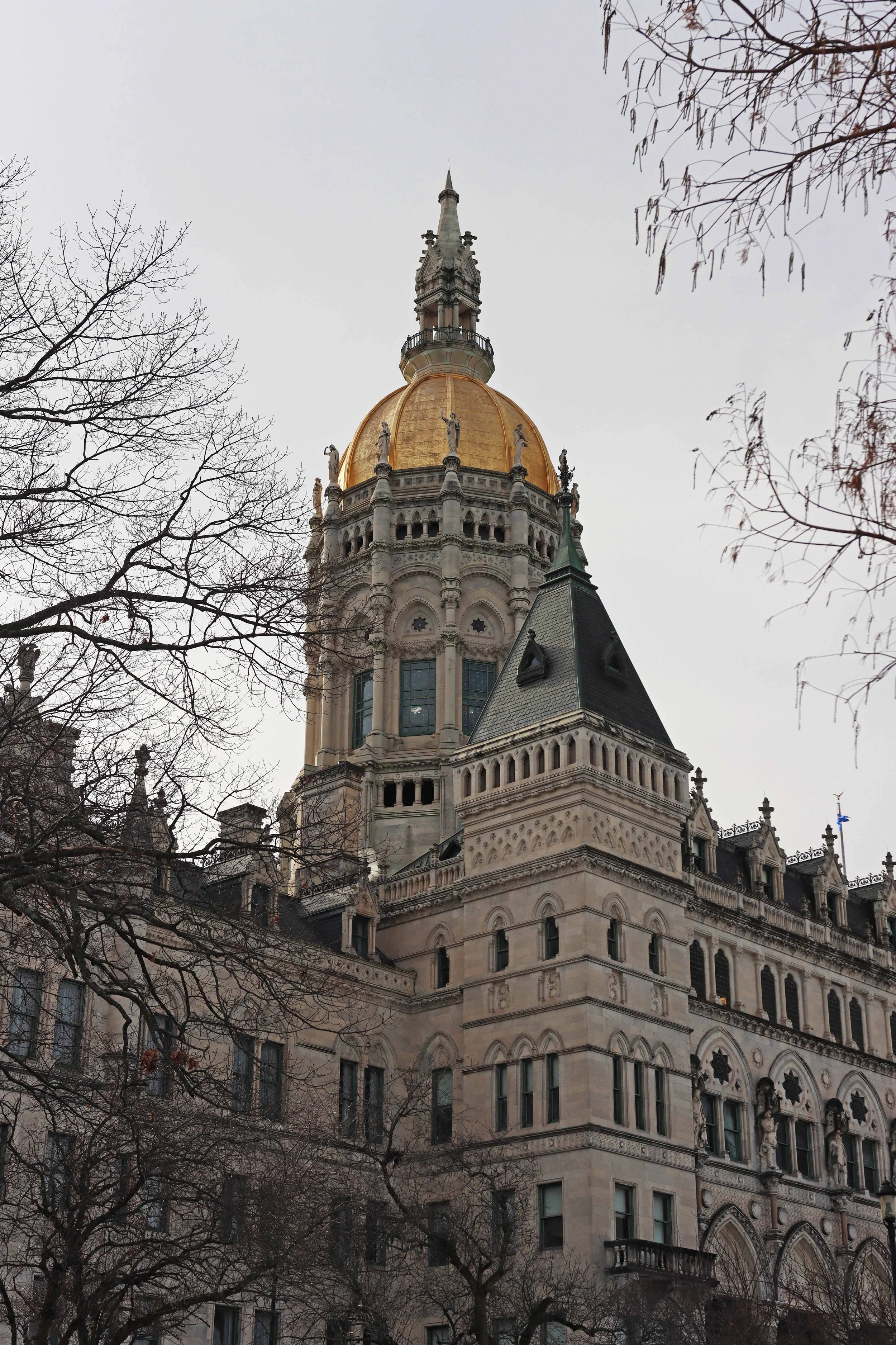
Connecticut State Capital Building
Long before European settlement, the land that became Hartford was home to Native American tribes of the Algonquian Confederacy, one of the largest Indigenous cultural networks in North America. These communities lived along the Connecticut River for thousands of years, relying on its fertile soil, abundant wildlife, and strategic location.
European contact began in the early 1600s when Dutch explorer Adriaen Block expanded New Netherland along the river. The Dutch established Fort Good Hope, a modest but strategic fur-trading post. Though short-lived, it marked Hartford’s first connection to global trade networks.
In 1635, English Puritans—led by Reverend Thomas Hooker—migrated from the overcrowded Massachusetts Bay Colony and founded Hartford. Hooker’s sermons emphasized representative government and individual consent, ideas that soon became revolutionary.
These principles were formalized in the Fundamental Orders of Connecticut (1639), often regarded as the world’s first written democratic constitution. Its influence would echo centuries later in the U.S. Constitution itself, cementing Hartford’s place in the foundation of American democracy.
East Hartford & West Hartford: A Shared Identity
East Hartford
East Hartford developed alongside Hartford as an essential industrial partner, shaped by its position across the Connecticut River and its strong manufacturing identity. Originally settled in the 17th century as farmland and river crossings, the town evolved into a working-class hub during the Industrial Revolution, supporting factories, transportation, and trade tied directly to Hartford’s growth. In the 20th century, East Hartford became nationally significant through its role in aviation and advanced manufacturing, most notably as the longtime home of Pratt & Whitney, whose aircraft engines powered both commercial aviation and American military strength. While often quieter and more residential than its western counterpart, East Hartford represents the backbone of the region—defined by labor, innovation, and the industries that sustained Greater Hartford through periods of economic change.
West Hartford
West Hartford began as an extension of Hartford, settled by the children and descendants of the city’s earliest residents seeking farmland beyond the capital’s boundaries. Over time, it evolved from an agricultural community into one of Connecticut’s most vibrant suburban towns, balancing residential neighborhoods with a thriving commercial and cultural center. As the birthplace of Noah Webster, West Hartford holds a deep connection to American language, education, and scholarship, a legacy that continues through its libraries, schools, and public art. Today, places like Blue Back Square and West Hartford Center reflect the town’s transformation into a modern, walkable destination—where historic roots, creative energy, and community life converge.
Manufacturing, Industry, and the American System
By the 19th century, Hartford stood at the forefront of the Industrial Revolution. Its factories pioneered interchangeable parts, precision tooling, and mechanized production—methods that powered America’s transformation into an industrial superpower.

Colt’s Paten Fire Arms Plant. Library of Congress. 1914
Samuel Colt and the Firearms Revolution
In 1836, inventor Samuel Colt patented the revolving cylinder, changing warfare—and global history—forever. His Hartford factory became the largest private armament manufacturer in the world, employing thousands and setting new standards for industrial efficiency.
The Bicycle Capital of the World
Hartford also became the Bicycle Capital of the World, thanks to the Pope Manufacturing Company. By the early 1900s, it was the largest bicycle producer in the United States, influencing transportation, urban design, and mobility nationwide.
Insurance Takes Root
As manufacturing wealth accumulated, so did financial institutions. Companies like Aetna and Travelers established Hartford as a global insurance hub—a title it retains to this day.
Hartford’s Impact on America
Hartford’s influence reaches far beyond its size. It helped shape America in four defining ways:
Democracy & Governance – The Fundamental Orders introduced representative government grounded in the consent of the governed.
Industrial Innovation – Hartford became a cornerstone of the American System of Manufacturing, emphasizing standardized parts and mass production.
Literature & Culture – The city fostered one of the most influential literary communities in American history.
Insurance & Finance – Hartford evolved into the Insurance Capital of the World, shaping modern risk management.
Few cities can claim such a broad and lasting impact on the nation’s political, economic, and cultural identity.
Rise, Fall, and Rise Again
Hartford was once among the wealthiest cities in America. But like many industrial centers, it faced severe decline in the mid-20th century.
The Fall
Manufacturing jobs disappeared
Highways cut through historic neighborhoods
Access to the Connecticut River was severed
Wealth fled to surrounding suburbs like East Hartford and West Hartford
By the 1990s, Hartford struggled with poverty, crime, and population loss.
The Revival
The city’s rebirth began with urban revitalization:
Riverfront Recapture restored public access to the river
Bushnell Park and downtown corridors were re-energized
Crime rates steadily declined, reaching near historic lows by the 2020s
Hartford didn’t erase its past—it rebuilt upon it.
The Connecticut River & Riverfront Renewal
The Connecticut River is Hartford’s lifeblood. Once an industrial artery, it has been reclaimed as a public space through decades of thoughtful planning.
Areas like Mortensen Riverfront Plaza, Charter Oak Landing, and Riverside Park reconnect the city to its origins. The statue of Abraham Lincoln meeting Harriet Beecher Stowe reminds visitors that Hartford helped ignite national conversations on slavery, freedom, and morality.
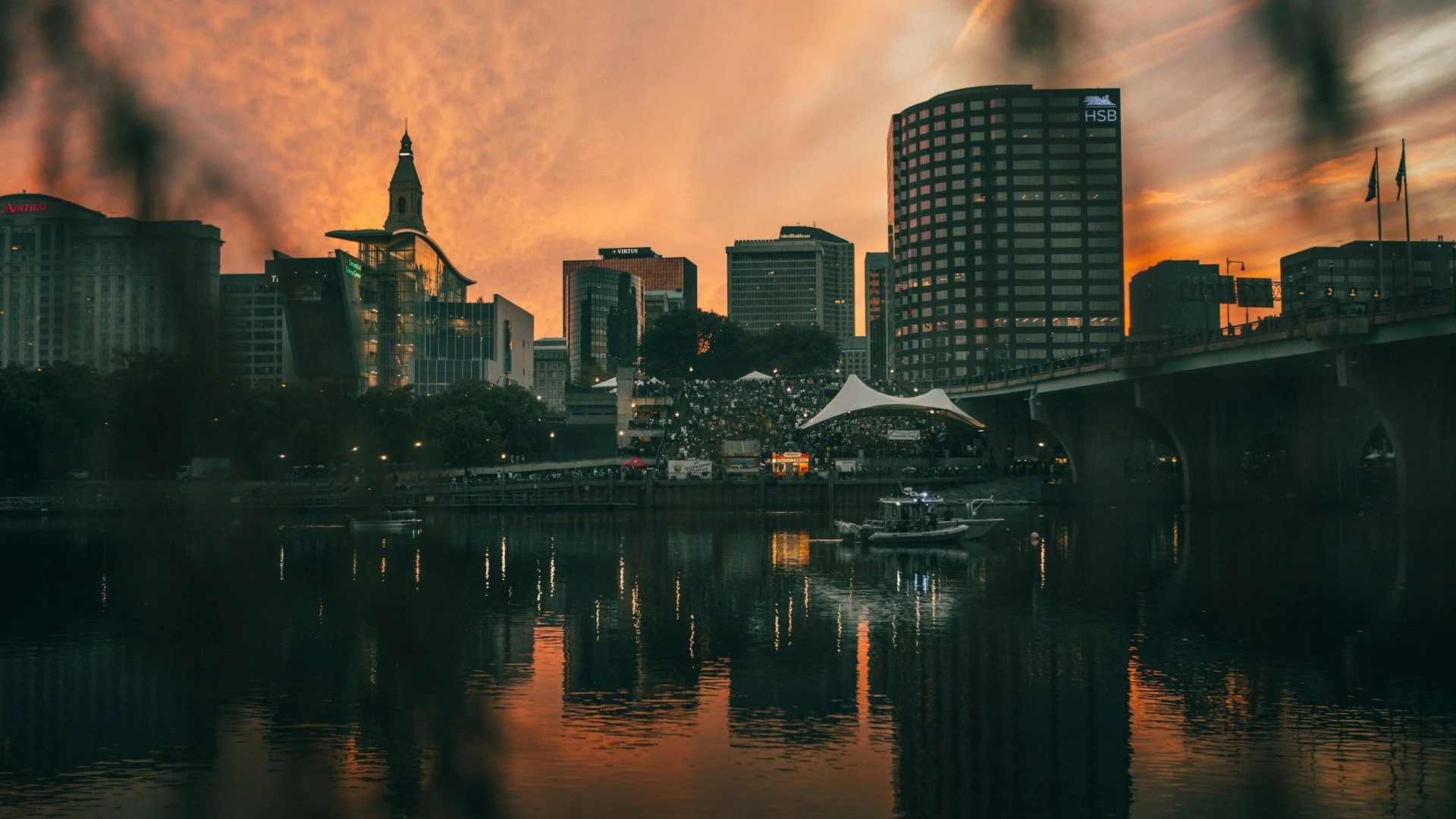
Hartford Riverfront. Billy Freeman/Unsplash. 2023.
Legacy & Influential Figures of Hartford
Hartford has produced—and attracted—remarkable individuals:
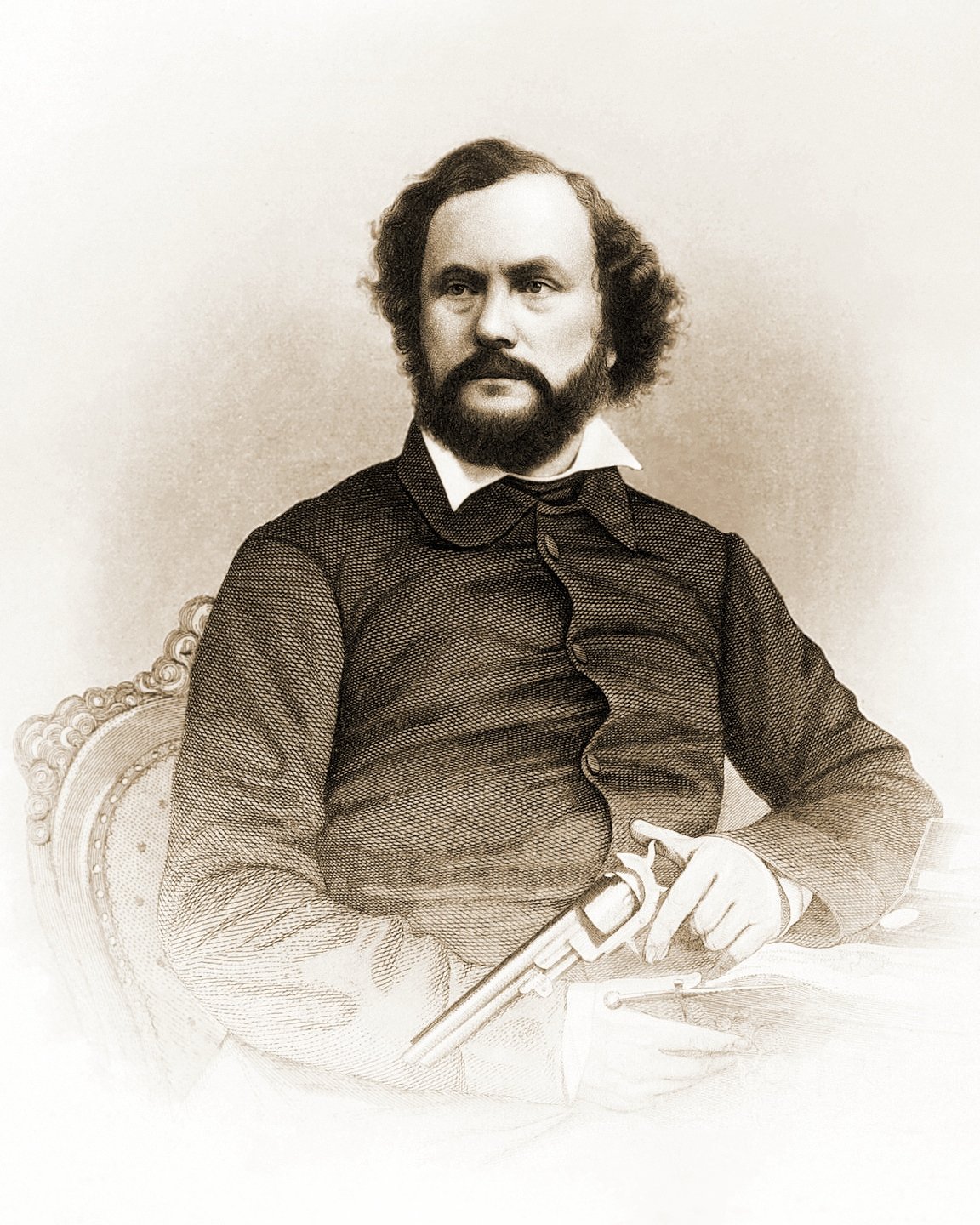
Samuel Colt
Samuel Colt revolutionized modern warfare and manufacturing by inventing the revolving cylinder firearm and establishing his factory in Hartford. His company pioneered mass production techniques that influenced industries far beyond firearms. Colt’s innovations helped place Hartford at the center of America’s Industrial Revolution
Mark Twain – Mark Twain, often called the father of American literature, wrote many of his most influential works while living in Hartford during the late 19th century. Surrounded by publishers, intellectuals, and reformers, he wrote The Adventures of Tom Sawyer, The Prince and the Pauper, and Adventures of Huckleberry Finn. Works that forever changed American storytelling through realism and regional voice. His Hartford years marked the most productive and defining period of his literary career. The Mark Twain House & Museum remains one of Hartford’s most powerful cultural landmarks.
Harriet Beecher Stowe – Harriet Beecher Stowe lived in Hartford when she wrote Uncle Tom’s Cabin, a novel that intensified national debate over slavery and influenced the course of American history. Her work became one of the most widely read books of the 19th century and played a critical role in the abolitionist movement. Her legacy stands as a reminder of literature’s power to shape moral consciousness.
Noah Webster – Born in West Hartford, Noah Webster dedicated his life to standardizing American language and education. His dictionary helped define American English and remains one of the most influential reference works in U.S. history. Webster’s work strengthened national identity during America’s formative years.
Katharine Hepburn – Katharine Hepburn, born in Hartford, became one of Hollywood’s most celebrated actresses, known for her independence and groundbreaking roles. She won a record four Academy Awards and helped redefine female characters on screen. Hepburn’s legacy reflects Hartford’s contribution to American culture and the arts.
J.P. Morgan – J. P. Morgan, born in Hartford, grew into one of the most powerful financiers in American history. He played a central role in stabilizing the U.S. economy during times of financial crisis and helped shape modern banking. Morgan’s influence extended globally, reinforcing Hartford’s reach beyond industry and culture.
Together, they shaped American language, literature, finance, civil rights, and global industry.
Why You Should Visit Hartford
Hartford is not a city frozen in time—it’s a city in conversation with its past.
Here, you can:
Walk the birthplace of American democracy
Explore innovations that shaped modern industry
Experience world-class literature where it was written
Witness a city that faced decline—and rebuilt with purpose
Hartford tells the American story honestly: its triumphs, contradictions, and resilience.
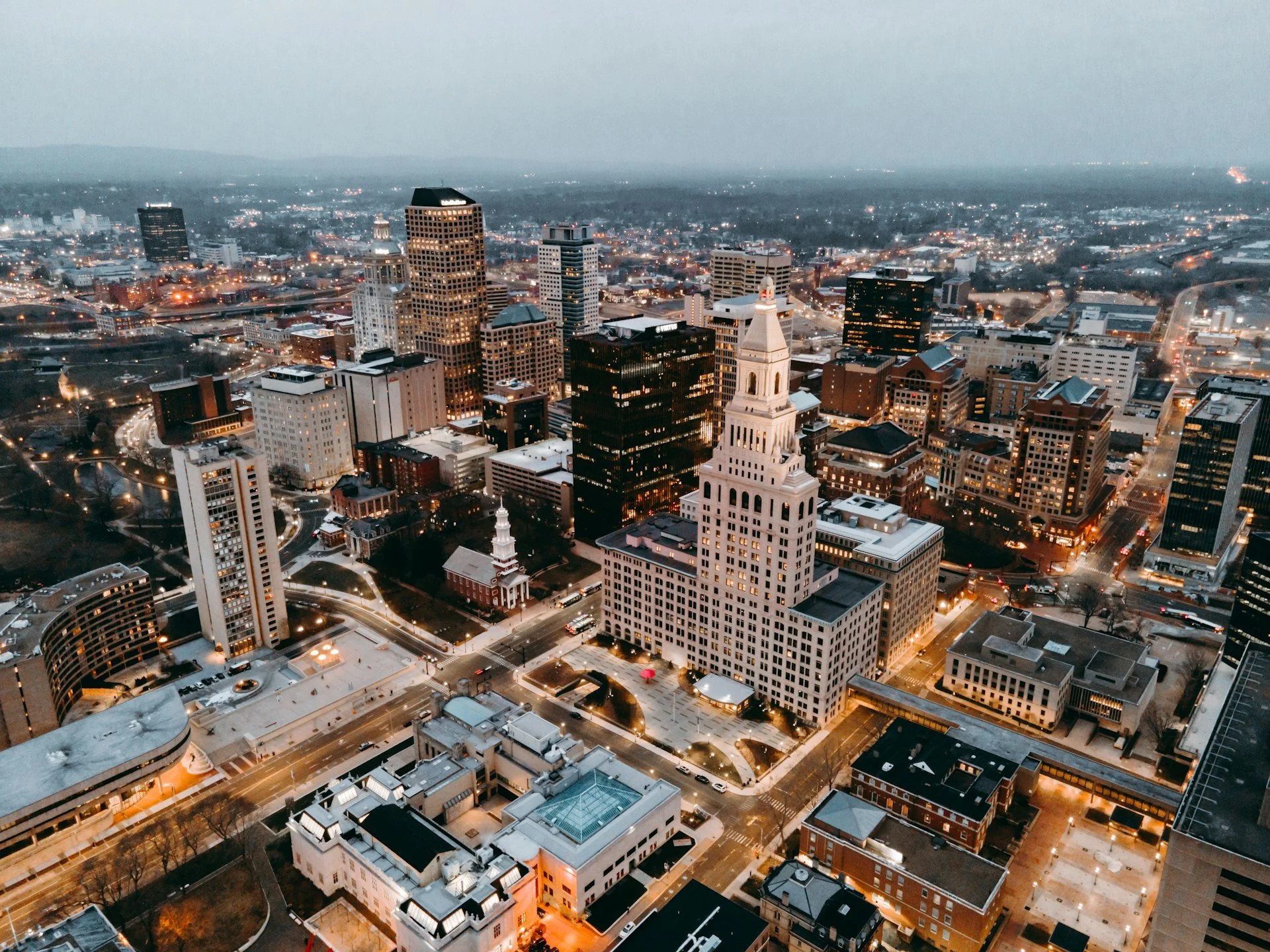
Hartford Skyline. Balazs Busznyak/Unsplash. 2021.
Top 10 Things to Do in Hartford
The Mark Twain House & Museum - Step inside the beautifully preserved home where Mark Twain wrote many of his greatest works and helped shape American literature.
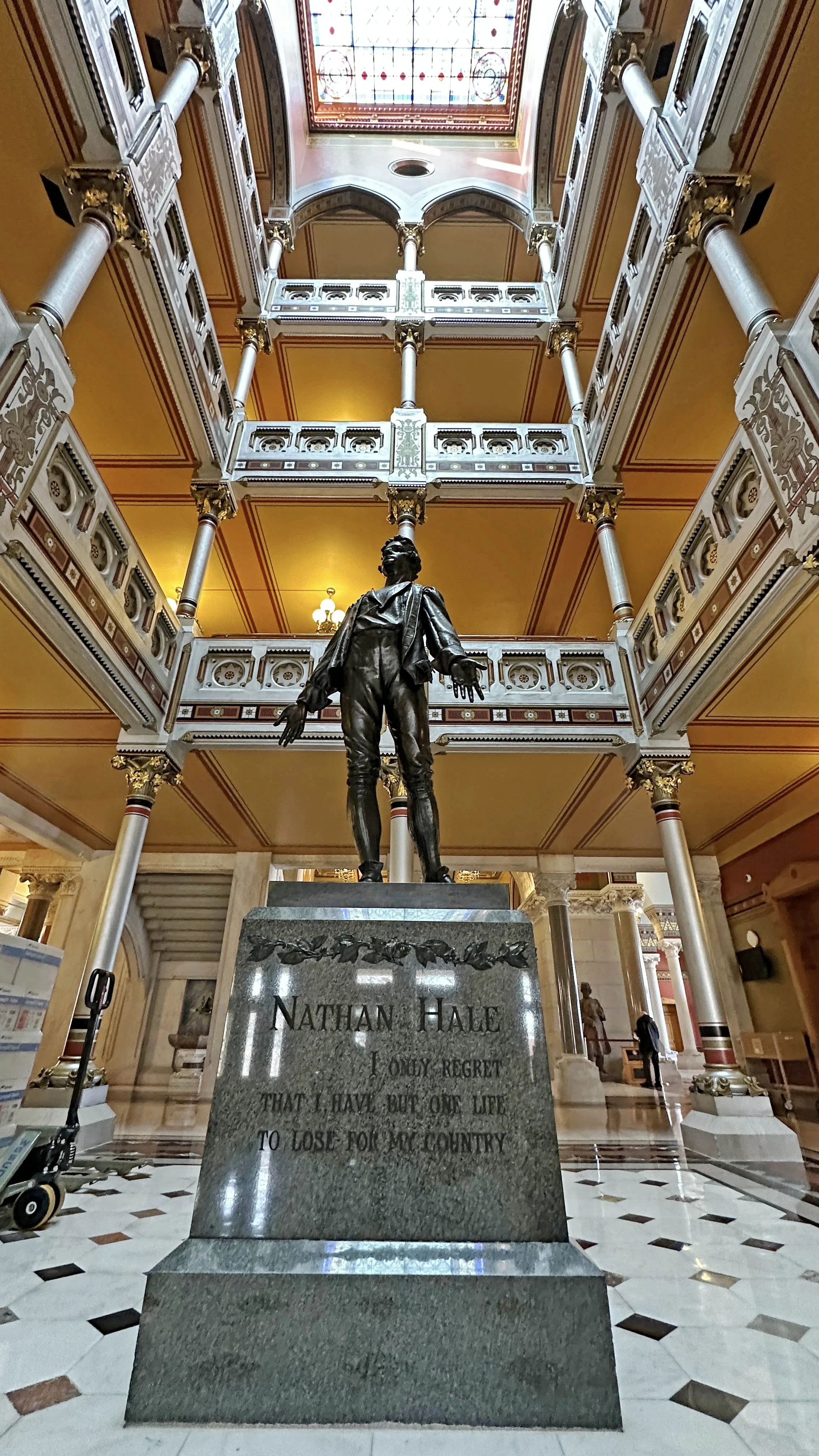
Connecticut State Capitol - Admire one of the most ornate state capitol buildings in the nation, crowned by a golden dome and rich with Connecticut’s political history.
Old State House - Discover one of the nation’s oldest statehouses, where early debates helped shape Connecticut’s role in American democracy.
Museum of Connecticut History - Dive into Connecticut’s military, industrial, and political past through artifacts that reveal the state’s national impact.
Bushnell Park - Stroll through America’s first publicly funded park, a scenic urban oasis designed during the City Beautiful Movement.
Wadsworth Atheneum Museum of Art - Explore the oldest continuously operating public art museum in the United States, featuring masterpieces from classical to contemporary art.
Connecticut Science Center - Explore hands-on exhibits and interactive science experiences that make learning fun for all ages, from engineering and space to biology and innovation.
Parkville Market - Sample global cuisine from dozens of vendors inside Hartford’s lively food hall, set within a restored historic warehouse.
Pratt Street Historic District - Experience a preserved downtown streetscape lined with colorful storefronts, shops, and cafés from Hartford’s commercial past.
Riverfront Parks - Walk, bike, or relax along the Connecticut River at revitalized parks that reconnect the city to its historic waterfront.
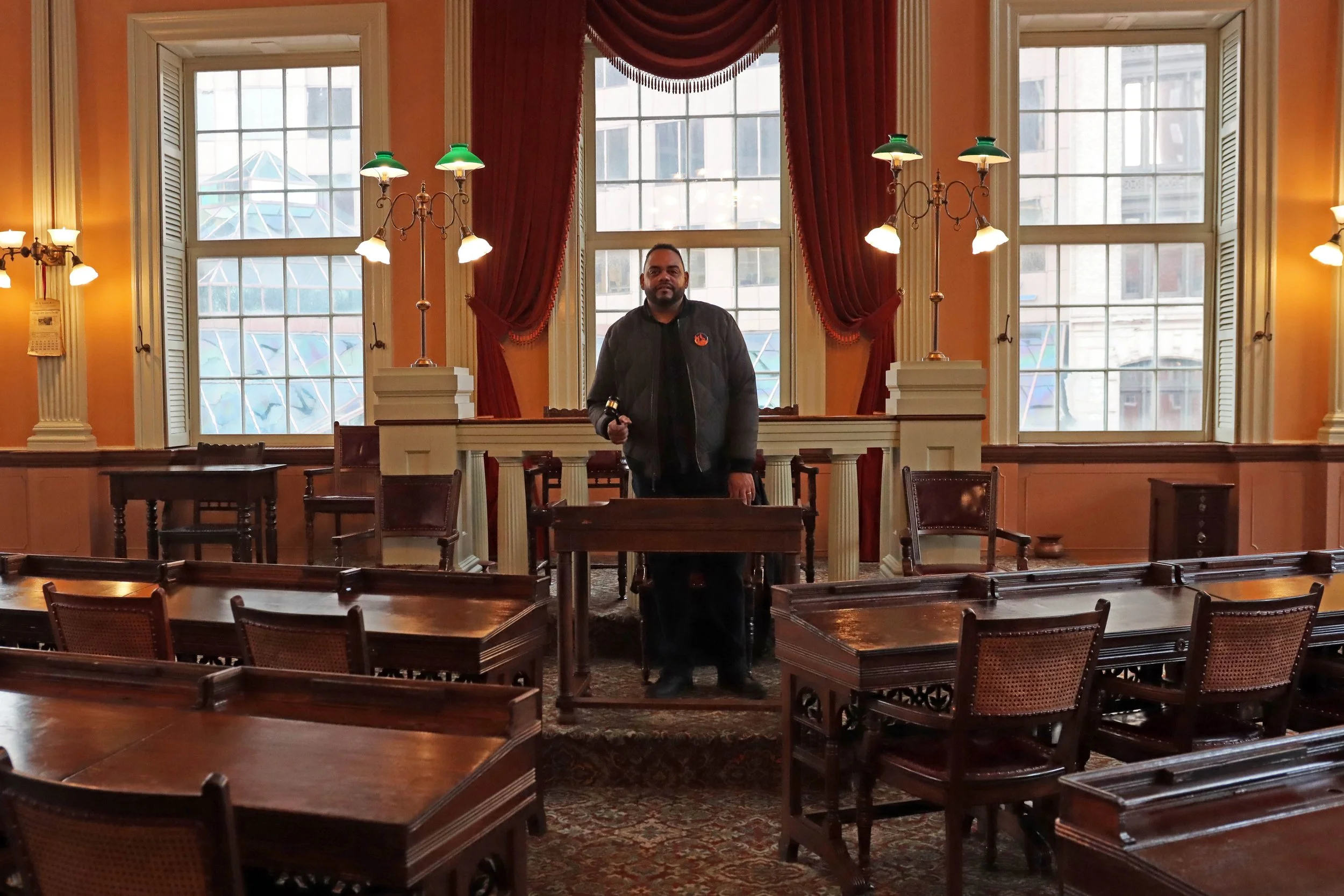
The original senate chambers at the Old State House
Best Restaurants in Hartford
Hartford’s food scene reflects its diversity and revival:
Parkville Market – A vibrant food hall featuring dozens of local vendors serving global cuisine under one historic industrial roof.
Salute – A Hartford classic offering refined Italian dishes in an elegant setting near Bushnell Park.
Max Downtown – An upscale steak and seafood restaurant known for its polished atmosphere and expertly crafted cocktails.
Fire by Forge – A creative, chef-driven restaurant showcasing bold flavors and seasonal ingredients in a modern urban space.
Bear’s Smokehouse BBQ – A beloved local spot serving authentic, slow-smoked barbecue that reflects Hartford’s down-to-earth culinary culture.
A City That Endures
Hartford’s journey mirrors the nation’s own—beginning with Indigenous roots, shaped by colonization, driven by innovation, challenged by change, and strengthened by reinvention. It remains a city of legacy, resilience, and relevance. A capital city that became a pillar to the history of America.
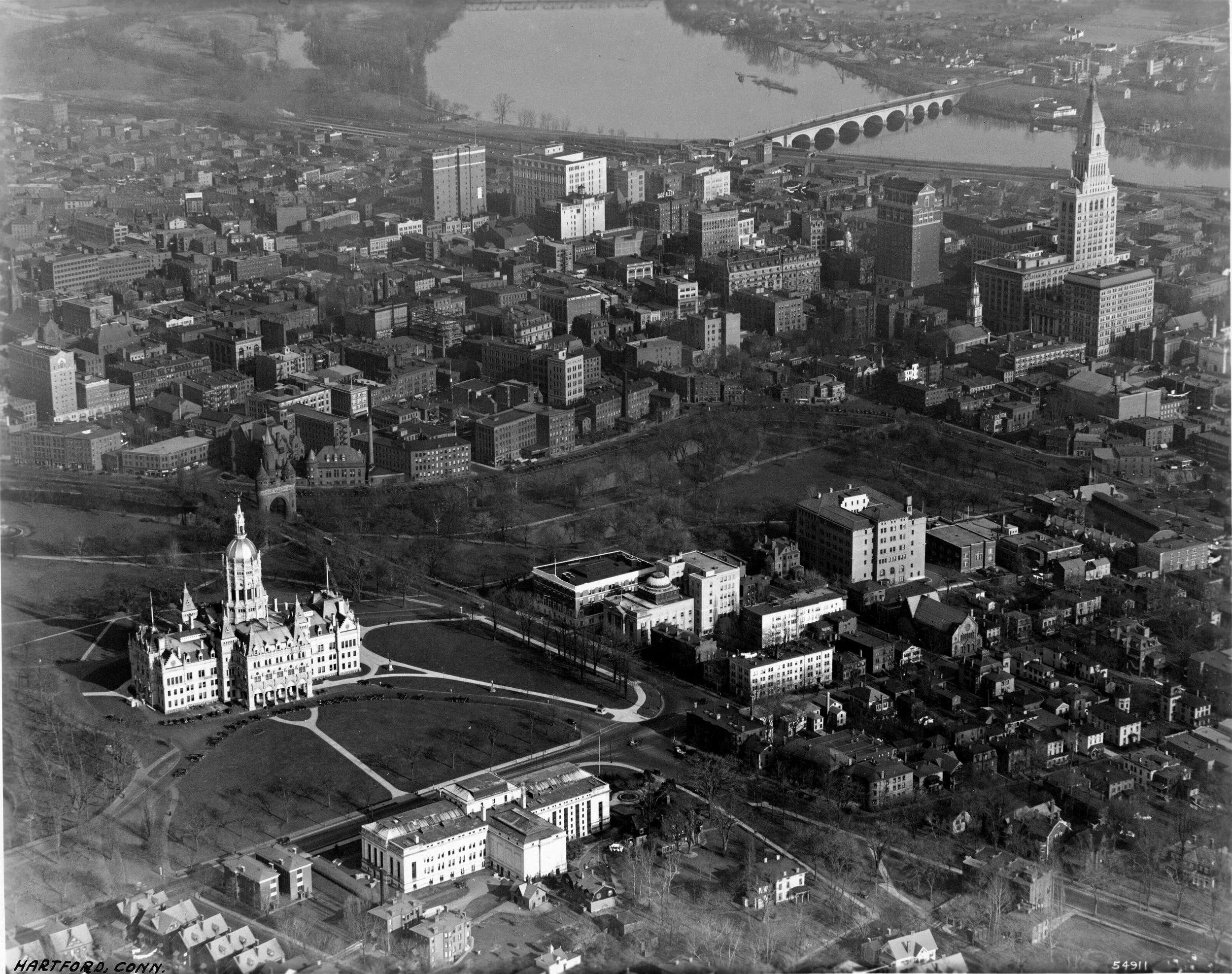
Hartford, Connecticut. Library of Congress. 1917.