

Ithaca, New York
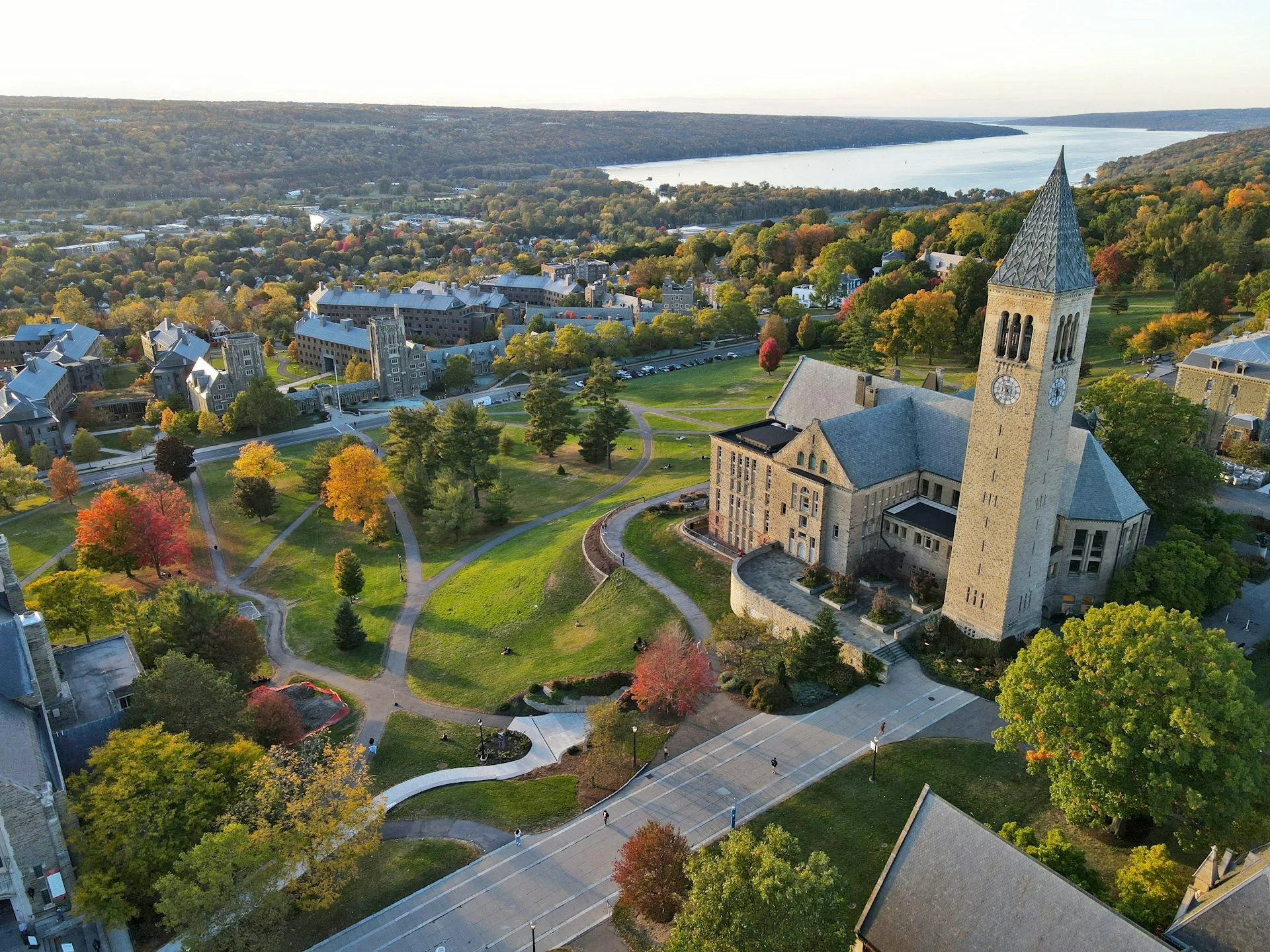
Aerial view of Cornell University, Ithaca, and Cayuga Lake. 2020. Will Barkoff/Unsplash
Ithaca, New York: Discovering the Heart of the Finger Lakes
At the southern tip of Cayuga Lake, nestled among towering cliffs, cascading waterfalls, and rolling vineyards, lies one of New York State's most captivating destinations. Ithaca is more than just a picturesque college town—it's a place where history, science, nature, and culture intertwine, creating an experience unlike anywhere else in America.
Famous for its slogan, "Ithaca is Gorges," this vibrant community is surrounded by more than 150 waterfalls within a few miles of downtown, making it one of the most spectacular natural landscapes in the Northeast. Beyond its dramatic scenery, Ithaca is home to world-renowned universities, an award-winning culinary scene, thriving arts community, and a fascinating history that stretches from Indigenous civilizations to some of America's greatest scientific achievements.
Whether you're an outdoor enthusiast chasing waterfalls, a history lover exploring New York's past, a foodie searching for locally sourced cuisine, or a traveler seeking a charming weekend escape, Ithaca offers something remarkable during every season.
It’s a destination where mornings begin with mist rising over Cayuga Lake, afternoons are spent hiking ancient gorges carved by glaciers, and evenings conclude with farm-to-table dinners in one of America's most celebrated small-city food scenes.
Welcome to Ithaca—the cultural and natural heart of New York's Finger Lakes.
The Finger Lakes: A Landscape Shaped by Ice
Long before Ithaca became a thriving university town, the region experienced one of nature's greatest engineering feats.
More than 12,000 years ago, massive glaciers covered much of New York State during the last Ice Age. As these enormous sheets of ice slowly advanced and retreated across the landscape, they carved deep valleys into the bedrock. When the glaciers melted, these valleys filled with pristine water, created eleven long, narrow lakes that resembled fingers stretching across central New York.

New York’s Finger Lakes. 2004. NASA
Today, these are known collectively as the Finger Lakes, one of the most breathtaking geographic regions in North America.
The lakes create a unique microclimate. Their deep waters moderate seasonal temperatures, allowing vineyards to flourish on hillsides that would otherwise be too cold for grape cultivation. Today, the Finger Lakes produce internationally recognized Rieslings, Cabernet Francs, Chardonnays, and sparkling wines, making the region one of the nations premier wine destinations.
Few places in America display the power of geology as beautifully as the Finger Lakes.
Cayuga Lake: The Lifeblood of Ithaca
Every great destination has a defining landmark, and for Ithaca, that distinction belongs to Cayuga Lake. Stretching nearly 40 miles from Ithaca to Seneca Falls, Cayuga is the longest of New York's Finger Lakes and one of its most beautiful.
For thousands of years, Cayuga Lake has been the region's greatest natural resource. Long before European settlement, Indigenous communities relied on its waters for transportation, fishing, and agriculture. During the nineteenth century, it became an economic highway, linking Ithaca to the Erie Canal and helping transform a small frontier village into a prosperous commercial center.
Today, the lake serves a different purpose. Rather than transporting lumber and grain, it welcomes kayakers, sailors, anglers, paddleboarders, photographers, and travelers seeking a peaceful escape into nature.
Its remarkable depth—more than 430 feet at its deepest point—creates ideal conditions for cold-water fish such as lake trout, Atlantic salmon, rainbow trout, and landlocked salmon, making Cayuga Lake one of New York's premier freshwater fishing destinations.
Before Ithaca: The Homeland of the Cayuga Nation

Map of Iroquois Five Nations and Mission Sites. 1879. John S. Clark/wikimedia
Long before America’s defining revolution, the southern end of Cayuga Lake was home to the Cayuga Nation, one of the original nations of the Haudenosaunee Confederacy, also known as the Iroquois Confederacy.
For centuries, the Cayuga people lived throughout the region, cultivating corn, beans, squash, and other crops while establishing extensive trade routes across what is now New York State. Their sophisticated political alliance became one of the oldest continuously operating democratic governments in the world, influencing political thinkers for generations.
Even today, the names Cayuga Lake, Cayuga County, and numerous local landmarks honor this enduring Indigenous heritage. Modern visitors are encouraged to recognize that Ithaca exists on the ancestral homeland of the Cayuga people—a reminder that the area's history reaches far beyond its nineteenth-century founding.
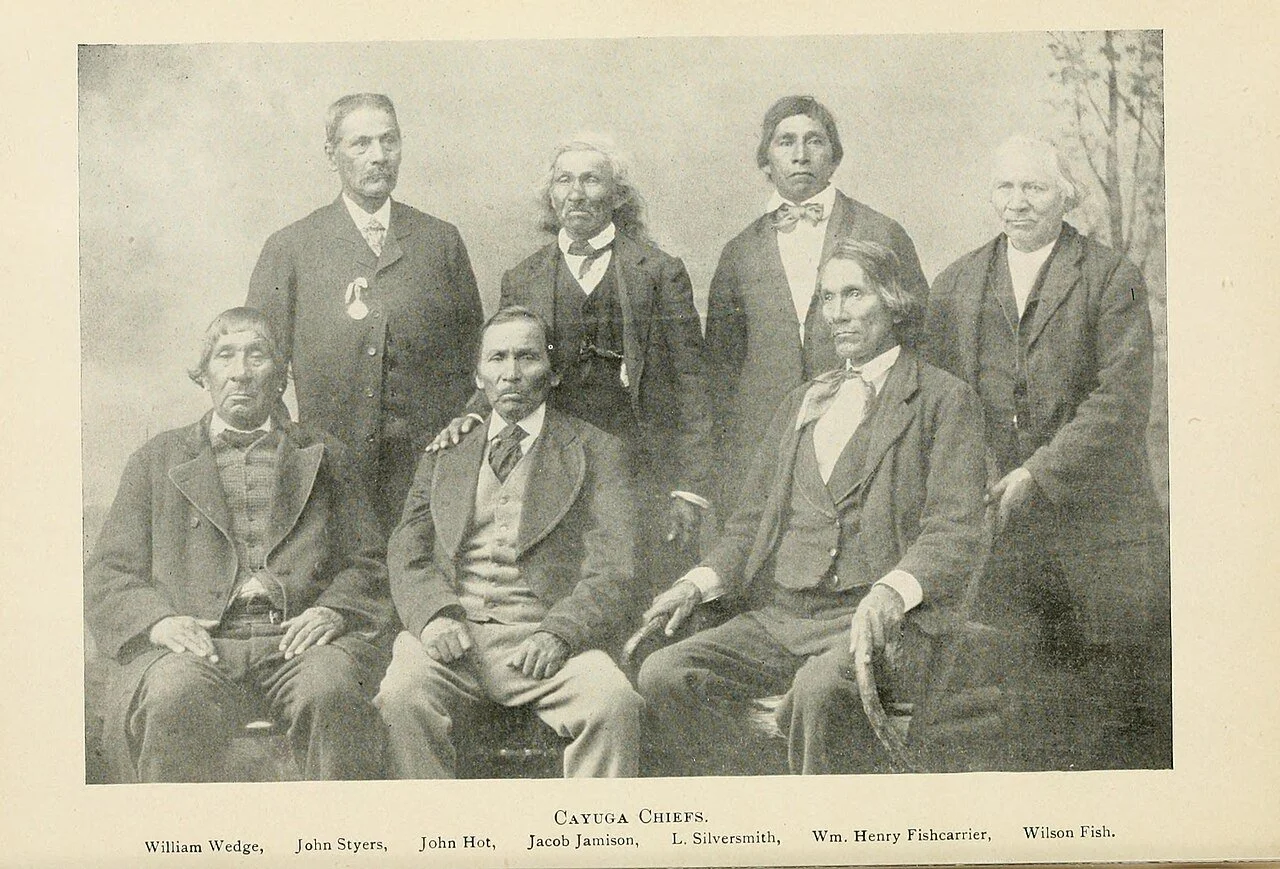
Portrait of Cayuga leaders. 1923. wikimedia
The Founding of Ithaca
Modern Ithaca began in 1789, when Simeon DeWitt, New York State's Surveyor General and former geographer to George Washington during the American Revolution, purchased land at the southern end of Cayuga Lake.
DeWitt envisioned a community that would become an important commercial center for central New York.
His choice of name reflected his admiration for classical literature. Rather than naming the settlement after an American figure, DeWitt looked to ancient Greece, borrowing the name Ithaca from Homer's Odyssey.
In Greek mythology, Ithaca was the island kingdom of Odysseus—a place representing perseverance, knowledge, discovery, and the journey home.
More than two centuries later, the symbolism still feels remarkably appropriate.
Like its ancient namesake, modern Ithaca has become synonymous with exploration through education, scientific discovery, environmental stewardship, and cultural innovation.
From Frontier Village to Thriving City
During the early nineteenth century, Ithaca grew rapidly thanks to its strategic location at the southern end of Cayuga Lake.
Water-powered mills lined the city's creeks, processing lumber, grain, and agricultural products harvested throughout the region. The opening of the Erie Canal in 1825—and later the Cayuga-Seneca Canal connection—transformed Ithaca into an important shipping center. Timber, flour, and farm products traveled north through Cayuga Lake before connecting with the Erie Canal and eventually reaching markets in Albany, Buffalo, and New York City.
These transportation routes fueled economic prosperity while attracting new businesses and industries.
By the late nineteenth century, Ithaca had become known for manufacturing as well as education. Companies like the Ithaca Gun Company and Ithaca Calendar Clock Company gained national recognition, while new railroads connected the growing city to the rest of the Northeast.
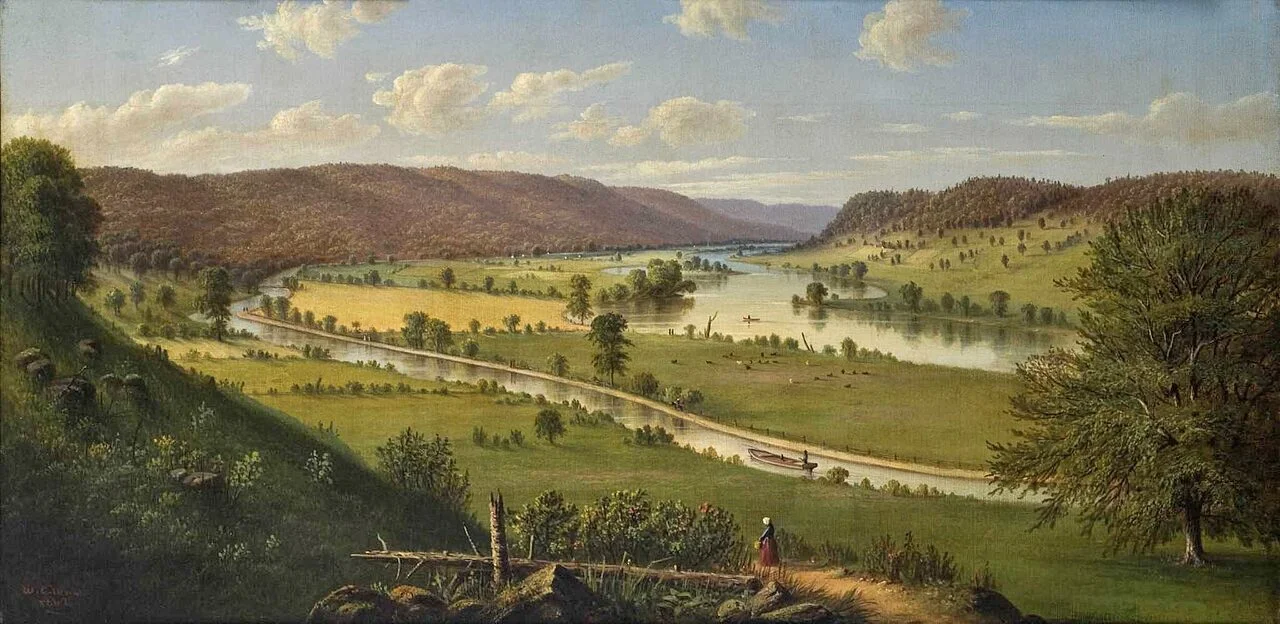
A painting of the Erie Canal by artist William Coventry Wall. 1862. wikimedia
Stewart Park: Where Ithaca Meets the Water
At the southern tip of Cayuga Lake lies one of Ithaca's favorite gathering places. Stewart Park combines waterfront beauty with an important chapter in American film history.
Today, families picnic beneath towering shade trees while cyclists, joggers, and walkers follow the scenic Cayuga Waterfront Trail. Children laugh from playgrounds as sailboats glide across the inlet, creating one of the city's most relaxing settings.
Few visitors realize that this peaceful park was once home to the Wharton Studio, one of America's earliest independent silent film production companies. During the 1910s, Ithaca briefly became an unexpected center of filmmaking, producing dozens of silent motion pictures before Hollywood emerged as the nation's entertainment capital.
Although the cameras have long disappeared, Stewart Park continues to celebrate creativity and community, offering spectacular lake views just minutes from downtown.
The park also serves as the southern gateway to the Cayuga Waterfront Trail, an eight-mile network connecting parks, marinas, the Farmers Market, Cass Park, and downtown Ithaca.
Allan H. Treman State Marine Park
Following the waterfront west leads visitors to Allan H. Treman State Marine Park, home to one of the largest inland marinas in New York State.
Hundreds of sailboats and motorboats fill the harbor during the summer months, while boat launches provide easy access to Cayuga Lake and the New York State Canal System.
On crisp autumn mornings, colorful foliage frames the marina as migrating birds gather along the shoreline. The peaceful atmosphere makes it easy to forget you're only minutes from the heart of a vibrant college town.
For many travelers, renting a kayak or paddleboard offers an entirely different perspective of Ithaca. Looking back toward the city, the hills rise dramatically above Cayuga Lake, revealing why this landscape has inspired artists, photographers, and writers for generations.
Why Ithaca Should Be on Everyone’s Bucket List
There are countless beautiful destinations across America, but few offer the remarkable diversity found in Ithaca.
In a single day, visitors can stand beside one of the tallest waterfalls east of the Rocky Mountains, hike ancient gorges carved by glaciers, explore an Ivy League campus that has changed the course of American education, enjoy internationally recognized cuisine, browse one of the nation's finest farmers markets, sip award-winning wines overlooking Cayuga Lake, and finish the evening listening to live music in the heart of downtown.
Few places combine so much natural beauty with intellectual curiosity and artistic creativity.
Ithaca is a city where scientists and musicians share coffee shops, hikers and students cross the same stone bridges, and waterfalls flow just steps from bustling cafés and bookstores.
It is a place where the outdoors and urban life exist in perfect harmony.
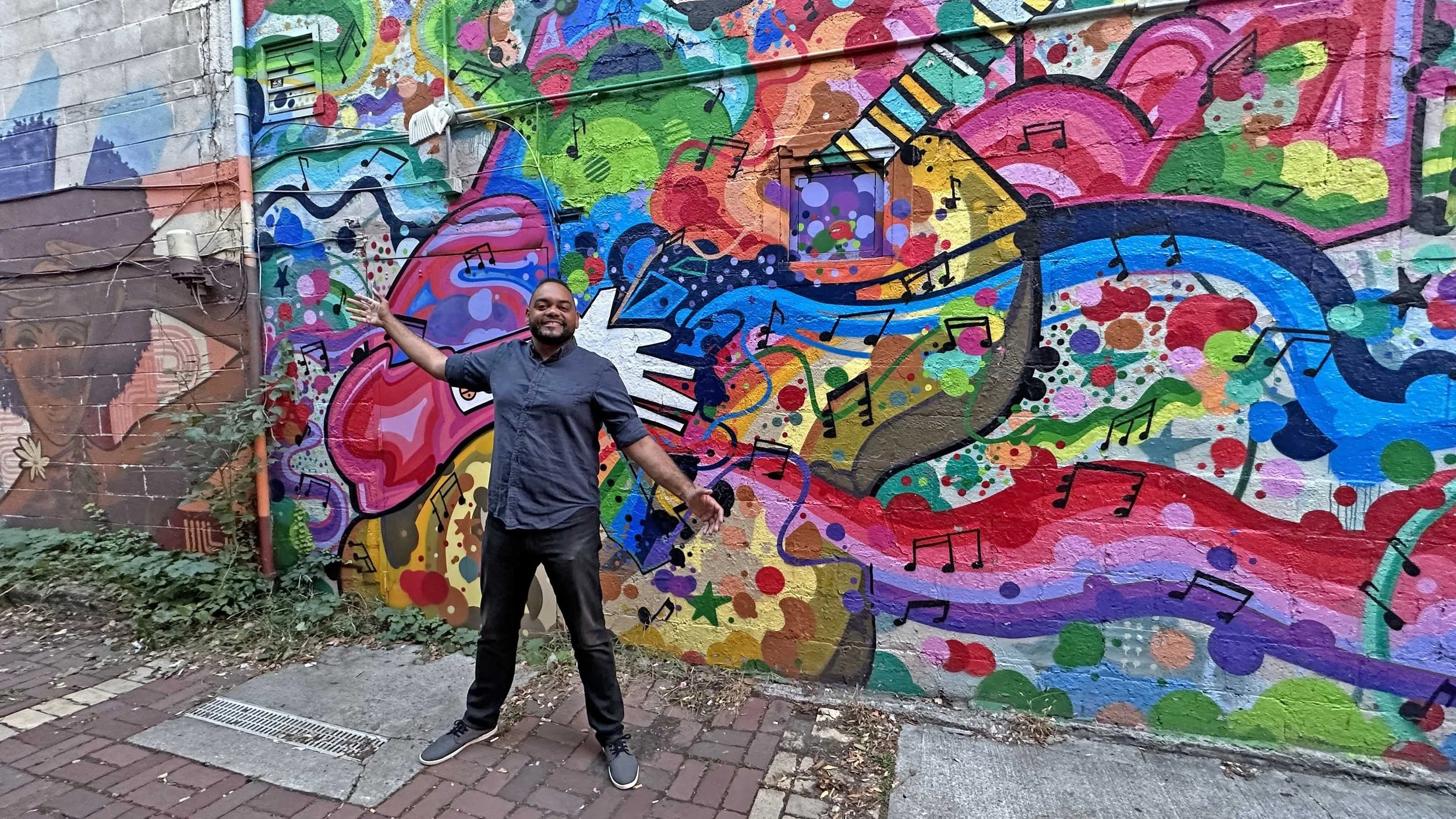
The incredible artwork found along Ithaca Commons. 2023.
Downtown Ithaca: The Cultural Heart of the Finger Lakes
Downtown Ithaca blends historic architecture with youthful energy, creating one of the most walkable and inviting downtown districts in New York State.
At its center lies The Ithaca Commons, a four-block pedestrian promenade that serves as the city's living room. Tree-lined walkways, outdoor cafés, artisan boutiques, bookstores, galleries, breweries, and locally owned restaurants create a lively atmosphere from morning until late evening.
Unlike many downtown districts that struggle to compete with suburban shopping centers, the Commons has flourished by embracing community. Street musicians perform beside public art installations. Students gather between classes. Families enjoy outdoor dining beneath café umbrellas. Local artists display handmade crafts during seasonal festivals.
Every visit feels uniquely Ithaca—creative, welcoming, and unmistakably authentic.
The pedestrian mall itself was created during the 1970s after city leaders sought to revitalize downtown by reducing automobile traffic. What was once considered an ambitious experiment has become one of the nation's most successful examples of urban placemaking, drawing hundreds of thousands of visitors each year while supporting locally owned businesses.
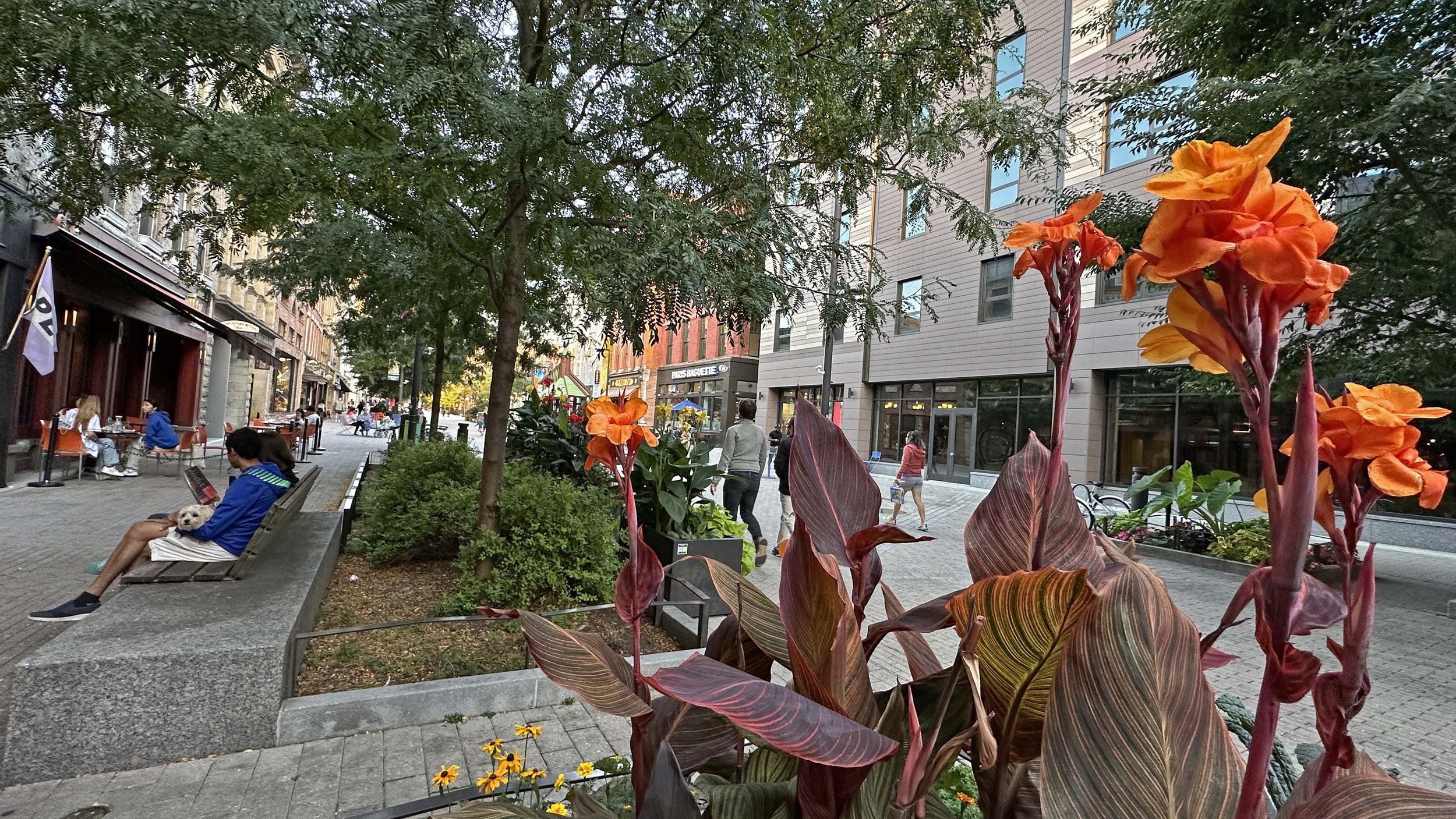
Ithaca Commons on a quiet morning. 2024.
The Ithaca Farmers Market: A Celebration of Local Flavor
Every weekend, another Ithaca tradition comes alive along the waterfront. Since 1973, the Ithaca Farmers Market has become one of the most beloved attractions in the Finger Lakes.
Set beneath colorful wooden pavilions overlooking Cayuga Inlet, the market welcomes thousands of visitors eager to sample the region's finest foods. Freshly baked bread, handcrafted cheeses, organic vegetables, locally roasted coffee, Finger Lakes wines, fresh flowers, handmade pottery, Original artwork. and International cuisine. Everything reflects the creativity and agricultural abundance of the region.
Live musicians perform while families gather along the docks overlooking the water. The atmosphere feels less like shopping and more like a weekly community celebration.
Festivals That Celebrate Community
One of the qualities that makes Ithaca so memorable is its strong sense of community. Throughout the year, festivals transform the city into a celebration of music, art, food, and local culture.
Each spring, the Ithaca Festival marks the arrival of warmer weather with a vibrant celebration of creativity. The festival begins with its famous parade, where imaginative floats, performers, musicians, and community organizations fill downtown streets with color and excitement.
Live music, theater, dance performances, local artisans, food vendors, and family-friendly activities continue throughout the weekend, making it one of the city's most anticipated annual events.
Autumn is perhaps the most magical time to visit Ithaca, and nowhere is that more evident than during the Apple Harvest Festival.
Held on the Ithaca Commons, the festival celebrates the Finger Lakes' rich agricultural heritage with fresh apples, homemade pies, cider doughnuts, caramel apples, craft beverages, local produce, artisan goods, and live entertainment. Surrounded by brilliant fall foliage, it perfectly captures the charm of Upstate New York.
Just outside Ithaca, the internationally acclaimed Finger Lakes GrassRoots Festival of Music & Dance brings together performers from around the world for four unforgettable days of music, dance, camping, and cultural exchange.
Featuring everything from folk and bluegrass to reggae, world music, jazz, and rock, the festival has earned a reputation as one of the finest independent music festivals in North America.
Few festivals capture Ithaca's creative spirit quite like Porchfest. Each September, quiet residential neighborhoods transform into one enormous outdoor concert.
Instead of traditional stages, musicians perform from front porches while audiences stroll from house to house carrying lawn chairs, picnic blankets, and smiles. What began in 2007 with just twenty bands has grown into an internationally recognized celebration featuring more than 200 performers across dozens of neighborhood porches.
Jazz drifts from one block. Bluegrass echoes from another. Rock bands energize nearby intersections. Classical quartets perform beneath maple trees. The festival has inspired similar events across the United States, Canada, and Australia, yet Ithaca remains its spiritual home.
Porchfest perfectly reflects the city's welcoming personality. There are no admission tickets. No stadium seating. No barriers between performers and audience. Only neighbors sharing music together.
The Natural Beauty Found in New York
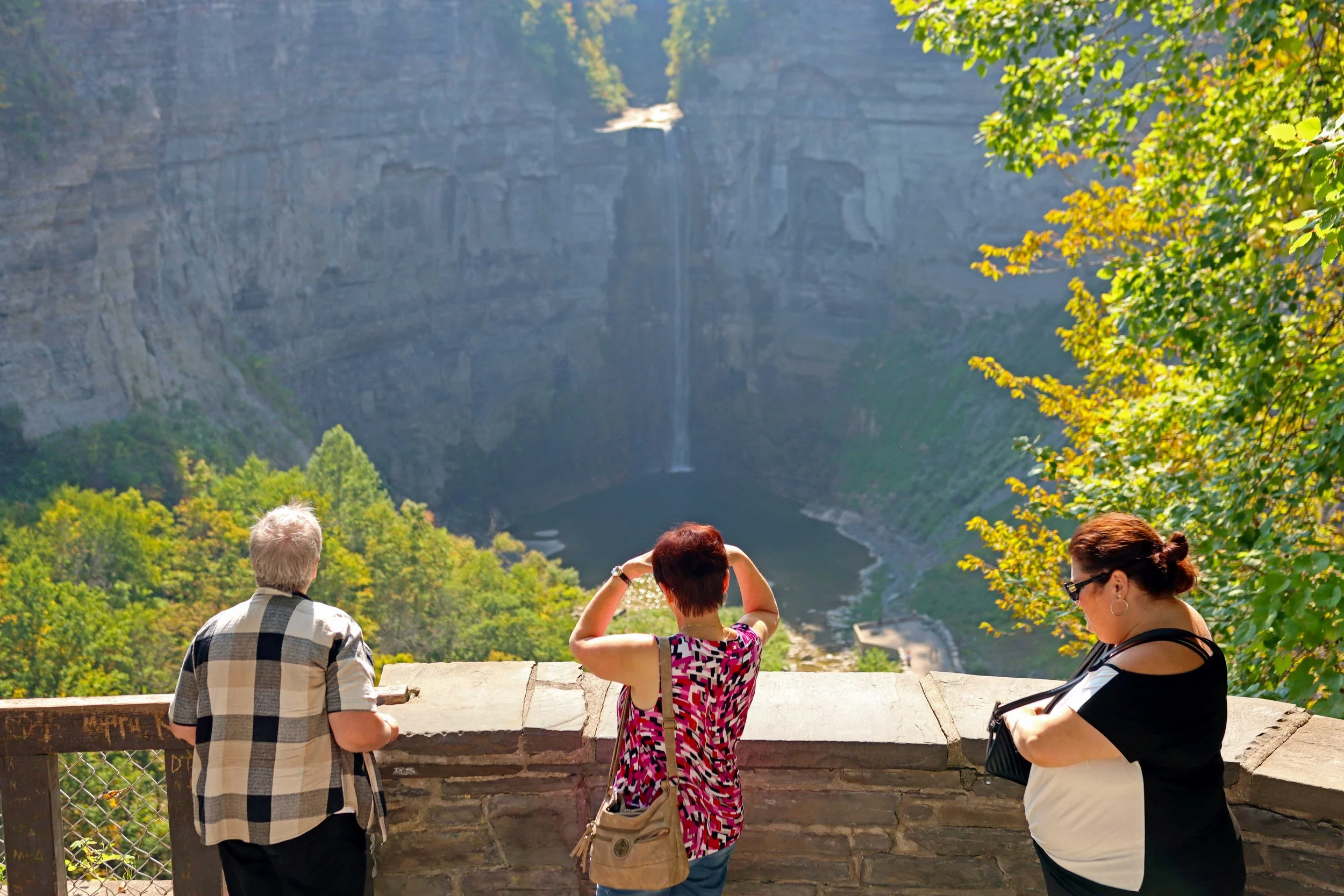
Visitors taking in the views from Taughannock Falls overlook. 2024.
Taughannock Falls State Park: A Giant Among Waterfalls
If there's one place that perfectly captures the grandeur of the Finger Lakes, it is Taughannock Falls State Park.
Located just ten miles north of downtown Ithaca along Cayuga Lake's western shore, the park is home to one of the tallest waterfalls east of the Rocky Mountains. At 215 feet, Taughannock Falls actually plunges 33 feet farther than Niagara Falls, although it lacks Niagara's immense volume of water. Instead, visitors are treated to something equally breathtaking—a single ribbon of water dropping uninterrupted from towering cliffs into a tranquil gorge below.
Standing at the overlook nearly 400 feet above the canyon floor, the view is nothing short of extraordinary.
The waterfall appears almost suspended in time, framed by sheer cliffs that rise dramatically on either side. Every season transforms the landscape. Spring brings roaring water from snowmelt, Summer fills the gorge with lush greenery, Autumn paints the canyon in brilliant shades of crimson, gold, and orange, and Winter freezes portions of the falls into magnificent columns of ice. Each visit offers an entirely different experience.
The beauty of Taughannock Falls extends far beyond the overlook. A relatively easy gorge trail follows Taughannock Creek nearly three-quarters of a mile to the base of the waterfall. Walking this trail feels like stepping backward through Earth's history. Towering walls of sandstone and shale reveal millions of years of geological change, their horizontal layers telling the story of ancient inland seas that once covered much of New York.
Long before glaciers carved Cayuga Lake, rivers flowed across this landscape at much higher elevations. When glaciers retreated, they deepened Cayuga Lake far faster than the surrounding streams could erode their channels. The result was a hanging valley, forcing Taughannock Creek to plunge dramatically into the newly deepened lake basin.
The waterfall we admire today is the product of thousands of years of continuous erosion, slowly carving the spectacular gorge that surrounds it. It is geology on a monumental scale. No photograph can truly capture its immense proportions.
Standing beneath the towering cliffs, visitors gain an appreciation not only for the waterfall itself but for the immense forces that shaped the Finger Lakes.
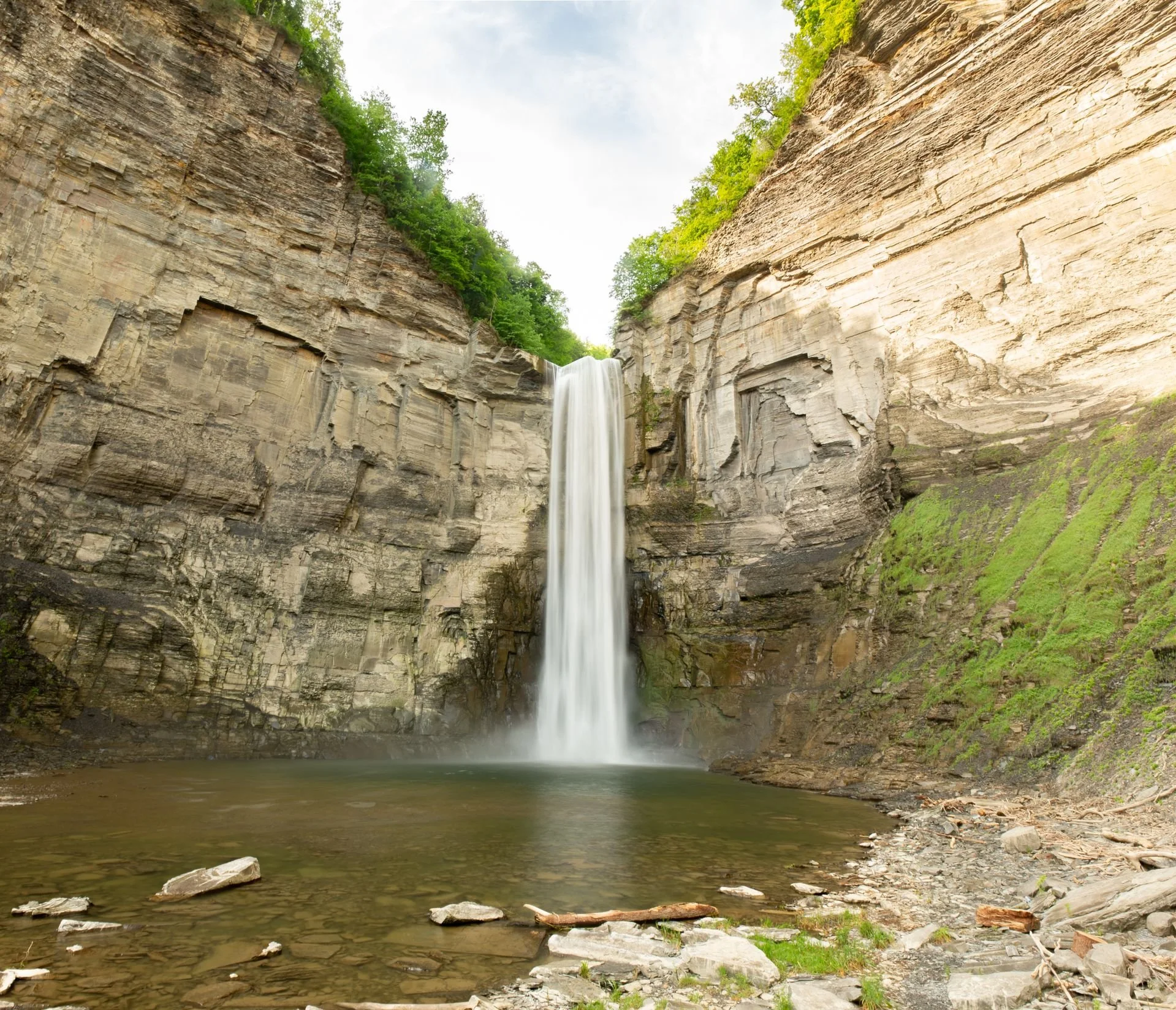
View of Taughannock Falls with lush greenery and rocky cliffs. 2021. Jay Chung/Pexels
Robert H. Treman State Park: The Crown Jewel of Ithaca's Gorges
If Taughannock Falls showcases the region's grandeur, Robert H. Treman State Park reveals its intimacy.
Located just southwest of downtown Ithaca, this remarkable park follows Enfield Creek through one of the most dramatic gorges in New York State. The experience begins almost immediately. Stone staircases wind beside rushing waterfalls. Elegant arched bridges cross crystal-clear streams. Towering cliffs rise hundreds of feet overhead. Every bend reveals another breathtaking cascade.
It feels less like a state park and more like entering a forgotten world hidden within the forest.
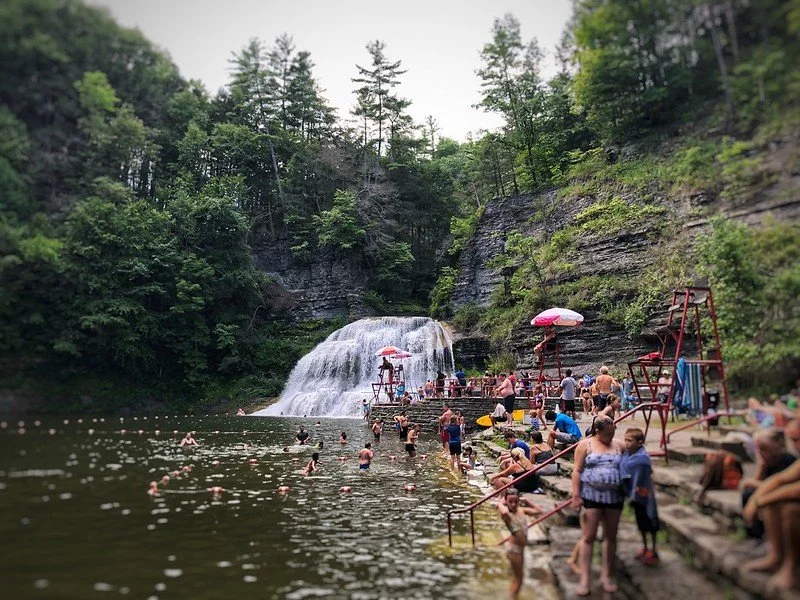
Summer swimming at Robert Treman State Park. 2018. Shelby L. Bell/Flickr
Lucifer Falls: One of New York's Most Spectacular Waterfalls
The centerpiece of Robert H. Treman State Park is Lucifer Falls, a magnificent 115-foot cascade surrounded by towering gorge walls. Despite its unusual name—which predates modern religious associations—the waterfall is simply breathtaking.
Water crashes over sculpted rock before descending into a narrow canyon filled with moss-covered cliffs and ancient stone. Nearby overlooks provide unforgettable panoramic views, while the Gorge Trail passes twelve waterfalls in less than two miles. Unlike many hiking destinations where scenic highlights are separated by long distances, Robert H. Treman offers constant rewards. Every few minutes another waterfall appears.
For photographers, hikers, and nature lovers alike, few places in the Finger Lakes offer such an extraordinary concentration of natural beauty.
Buttermilk Falls State Park: A Staircase of Cascades
Just outside downtown lies another of Ithaca's natural treasures. Buttermilk Falls State Park is named for the frothy appearance of Buttermilk Creek as it tumbles over a series of rocky ledges. Rather than featuring one enormous waterfall, the park presents visitors with a succession of beautiful cascades connected by winding trails. The main waterfall, located near the park entrance, is among the most photographed in the Finger Lakes.
Beyond it, the Gorge Trail climbs steadily through a narrow canyon where dozens of smaller waterfalls spill over layered shale and sandstone. During summer, visitors cool off in the park's natural swimming area beneath the falls—a beloved tradition for generations of Ithaca residents.
The peaceful forest, rushing water, and cool shade make Buttermilk Falls one of the city's favorite escapes.
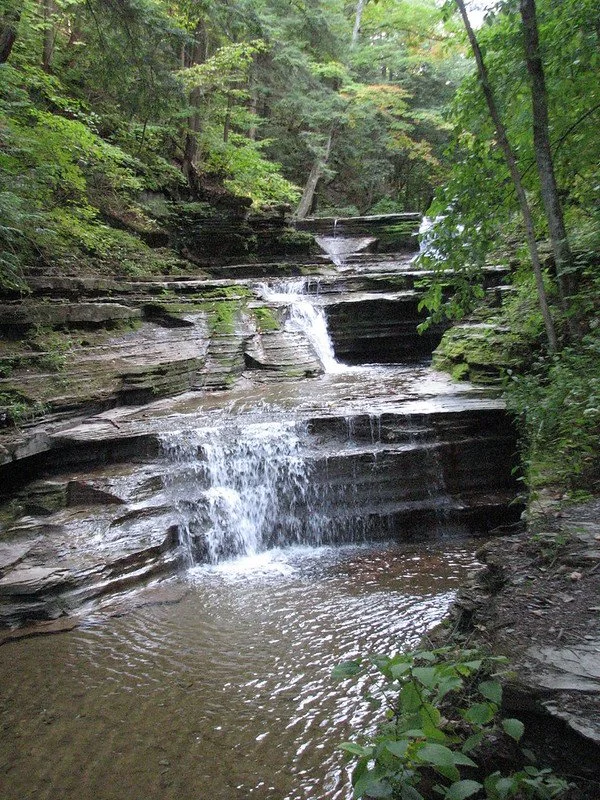
Buttermilk Falls State Park. 2009. Bob Is Traveling/Flickr
Cornell University: An Ivy League Legacy That Changed America

Cornell Cheerleader. 1908. wikimedia

Cornell University Students at masquerade party. 1915. wikimedia
Towering above the city on East Hill is one of the world's most respected institutions of higher learning. Cornell University is an institution whose influence has shaped American education, scientific discovery, agriculture, engineering, medicine, public policy, and space exploration for more than 150 years.
Founded in 1865 by entrepreneur Ezra Cornell and statesman Andrew Dickson White, Cornell was created with a revolutionary vision. At a time when higher education in America was largely reserved for wealthy men studying classical subjects, Cornell sought to build something entirely different.
Ezra Cornell famously declared:
"I would found an institution where any person can find instruction in any study."
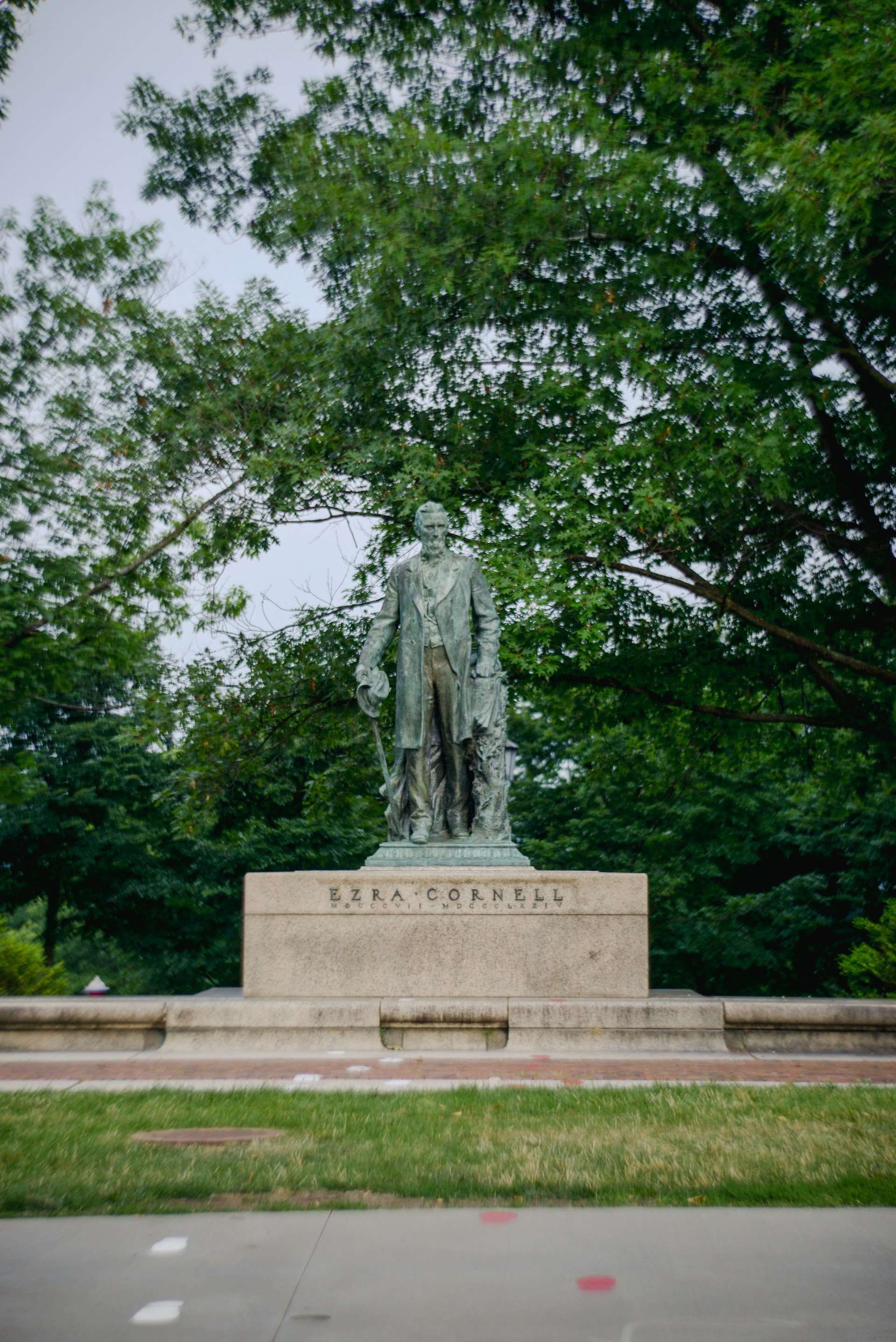
Statue of Cornell founder, Ezra Cornell. 2024. Monique Caraballo/Unsplash
Those words became far more than a motto—they became the guiding philosophy of one of America's most influential universities.
Cornell was New York State's land-grant university, established under the Morrill Land-Grant Act, which encouraged states to create colleges specializing in agriculture, engineering, science, and practical education. While many universities emphasized tradition, Cornell embraced innovation, becoming one of the first major American institutions to offer an education that blended the liberal arts with scientific research and professional studies.
Today, that vision continues to attract more than 25,000 students from every state and over 120 countries, making Ithaca one of the most internationally diverse small cities in America.
A Campus Like No Other
Few university campuses rival Cornell's natural beauty. Spread across more than 2,300 acres, the campus overlooks Cayuga Lake from high atop East Hill, offering sweeping panoramic views that stretch across forests, farmland, vineyards, and the rolling hills of the Finger Lakes.
Historic Gothic buildings stand beside cutting-edge research laboratories.
Tree-lined pathways wind between libraries, museums, botanical gardens, and quiet courtyards where students gather to study beneath centuries-old oaks.
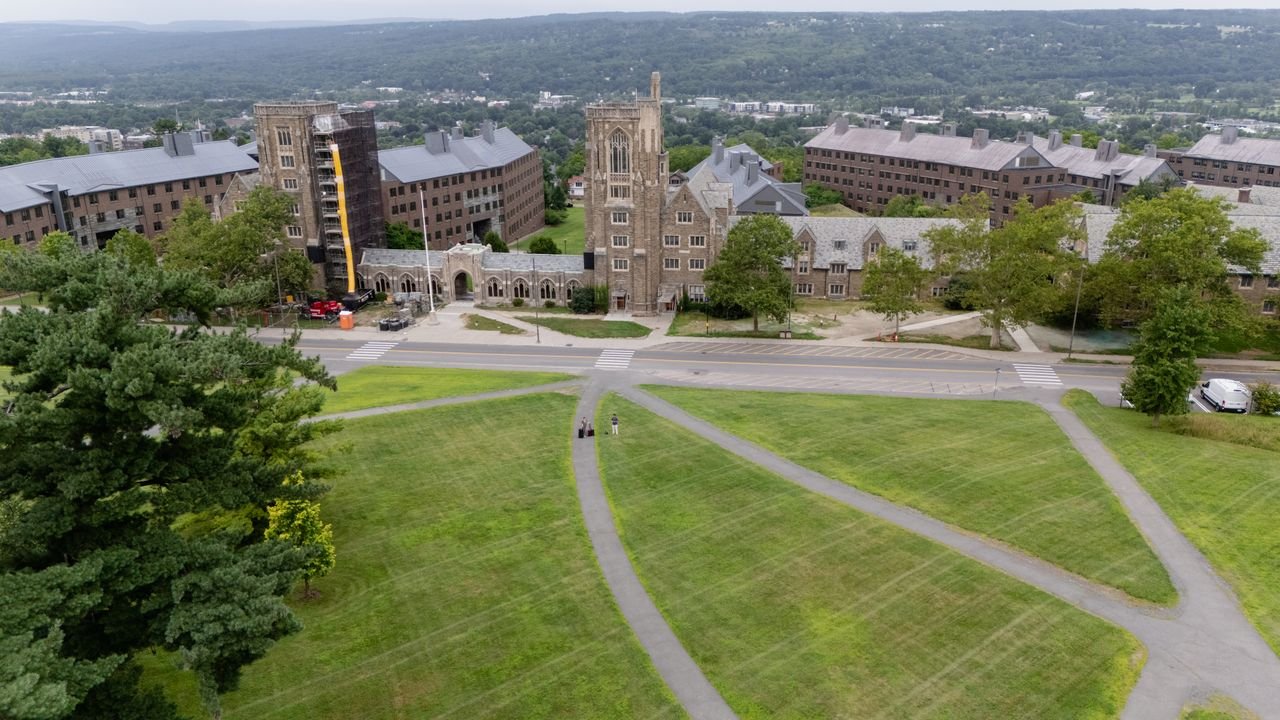
Aerial view of historic Cornell University. 2026. David Yu/Pexels
During autumn, Cornell becomes especially spectacular.
Thousands of maple, oak, and beech trees transform into brilliant shades of crimson, amber, and gold, creating one of the most photographed college campuses in the United States.
The iconic McGraw Tower, completed in 1891, rises above campus and remains one of Ithaca's most recognizable landmarks. Its famous chimes ring across the hills several times each day, a tradition that has continued for more than a century.
From nearly every corner of campus, visitors are reminded that Cornell exists in harmony with nature rather than apart from it.
A Global Leader in Research and Innovation
Cornell's impact extends far beyond its picturesque campus. The university consistently ranks among the world's leading research institutions, producing groundbreaking discoveries in medicine, veterinary science, artificial intelligence, engineering, agriculture, climate science, architecture, and renewable energy.
Cornell scientists have pioneered advances in cancer treatment, genetics, robotics, nanotechnology, sustainable farming, and regenerative medicine. Its College of Agriculture and Life Sciences has helped transform farming practices around the globe, while the College of Veterinary Medicine remains one of the premier veterinary schools in the world.
The university also played a major role in developing technologies that shape modern life—from communications systems and computing to materials science and environmental conservation.
Few institutions have contributed so broadly to America's scientific leadership.
Carl Sagan: Bringing the Universe to Ithaca
No individual symbolizes Cornell's spirit of discovery more than Carl Sagan. For nearly three decades, Sagan taught astronomy at Cornell while becoming one of history's greatest science communicators. His groundbreaking television series Cosmos introduced millions of viewers to astronomy, planetary science, and humanity's place within the universe.
Sagan also worked closely with NASA on the Pioneer and Voyager missions, helping create the famous Golden Record carried aboard Voyager 1 and Voyager 2—messages intended for any intelligent civilizations that might one day discover humanity's spacecraft.
His work inspired generations of scientists, educators, and dreamers. His legacy lives on through the Sagan Planet Walk, Cornell's astronomy programs, and the countless students who continue exploring the mysteries of the universe from Ithaca. Sagan inspired millions through television, books, and public lectures, reminding humanity that curiosity is among our greatest strengths.
Walking Through the Solar System
The Sagan Planet Walk located in the Ithaca Commons transforms downtown Ithaca into a scale model of our Solar System. Stretching nearly a mile, eleven granite monuments represent the Sun and each planet at one-billionth of their actual size and distance.
The walk becomes even more meaningful knowing that another beloved science educator, Bill Nye, studied engineering at Cornell before becoming one of the world's best-known science communicators—a legacy directly inspired by Sagan's passion for making science accessible to everyone.

The Sagan Planet Walk at the Ithaca Commons
Cornell's Famous Alumni
Walking through Cornell's campus means following in the footsteps of some of the most influential people in modern history.
Among its distinguished alumni are:
Justice Ruth Bader Ginsburg, whose groundbreaking legal career transformed women's rights before she became an Associate Justice of the United States Supreme Court.
Bill Nye, the beloved science educator whose television programs inspired generations of children to embrace science and engineering.
Toni Morrison, Nobel Prize-winning author and one of America's greatest literary voices, who taught at Cornell early in her academic career.
E. B. White, author of Charlotte's Web and Stuart Little, whose writing helped shape American children's literature.
Thomas Pynchon, one of the most celebrated and enigmatic novelists of the twentieth century.
Countless Nobel Prize winners, astronauts, business leaders, architects, diplomats, physicians, and innovators whose work continues to influence the world.
Cornell's legacy is measured not simply by rankings, but by the extraordinary achievements of those who have studied and taught here.
Nature at Cornell's Front Door
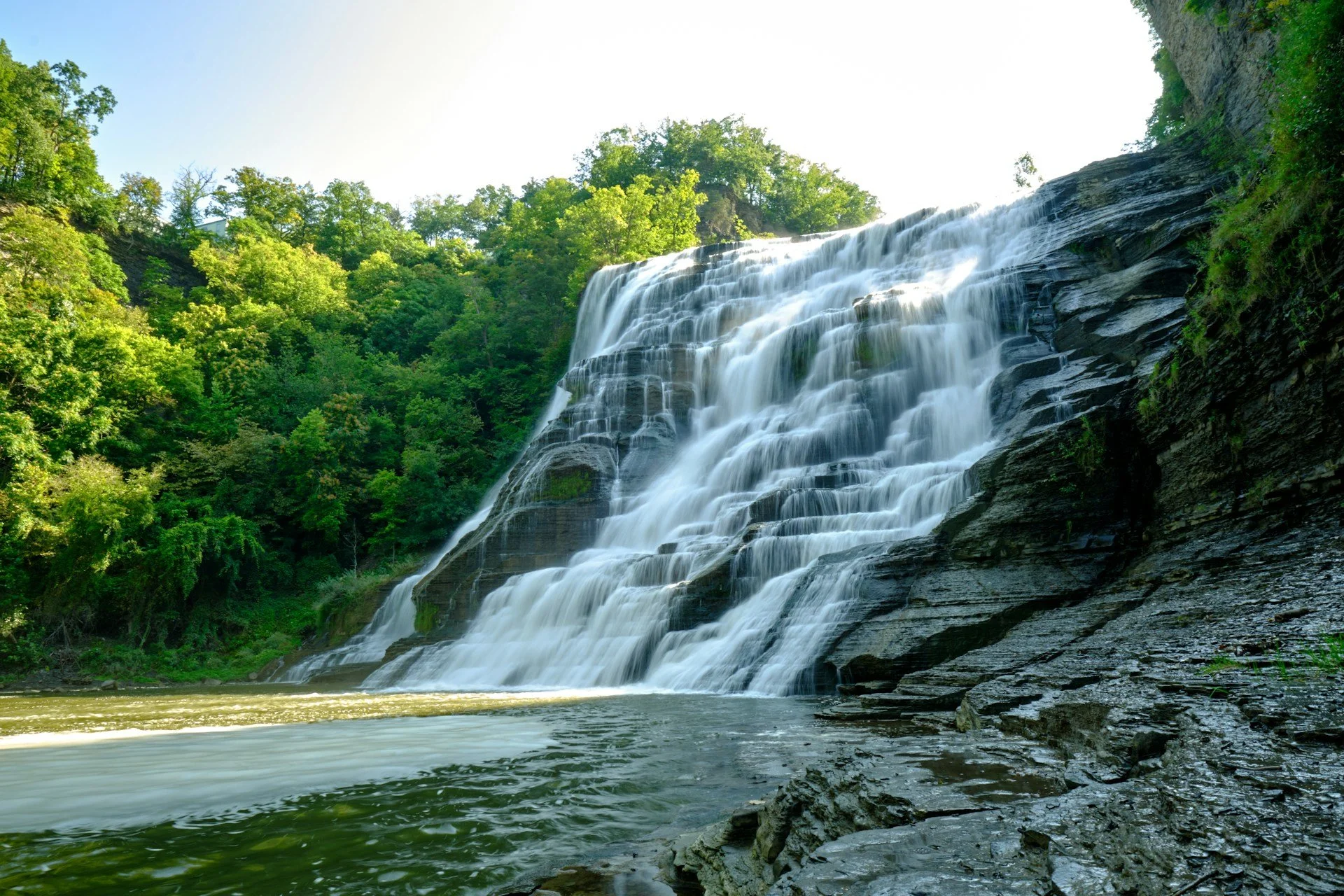
Ithaca Falls. 2023. Yakov Leonov/Unsplash
Fall Creek Gorge
One of Cornell's greatest treasures isn't a classroom. It's a gorge. Fall Creek Gorge cuts dramatically through the heart of campus, creating one of the most beautiful university landscapes in America.
Waterfalls tumble through ancient rock formations before flowing toward Cayuga Lake. Elegant stone bridges span deep ravines. Forest trails weave through towering hardwoods.
Students cross these bridges every day on their way to class, often pausing to admire scenery that visitors travel hundreds of miles to experience.
The Suspension Bridge
Perhaps the most unforgettable viewpoint on campus is the Cornell Suspension Bridge. Stretching high above Fall Creek Gorge, the bridge rises approximately 140 feet above the rushing waters below.
Standing at its center provides breathtaking panoramic views of waterfalls, forested cliffs, and the rolling hills surrounding Ithaca. For first-time visitors, it's both exhilarating and humbling. Looking downstream, the gorge seems to disappear into an endless sea of autumn colors. Looking upstream, waterfalls tumble through rock formations carved over millions of years.
It perfectly illustrates why Ithaca's slogan proudly declares:
"Ithaca is Gorges."
Triphammer Falls and Horseshoe Falls
Among Fall Creek's most scenic attractions are Triphammer Falls and Horseshoe Falls. Triphammer Falls cascades more than fifty feet beneath Beebe Dam, creating one of Cornell's signature landscapes. Just downstream, Horseshoe Falls flows gracefully over curved rock ledges before disappearing into the gorge below.
The surrounding forests create an atmosphere of remarkable tranquility despite being located in the middle of an active university campus. Few colleges anywhere in the world offer such extraordinary access to nature.
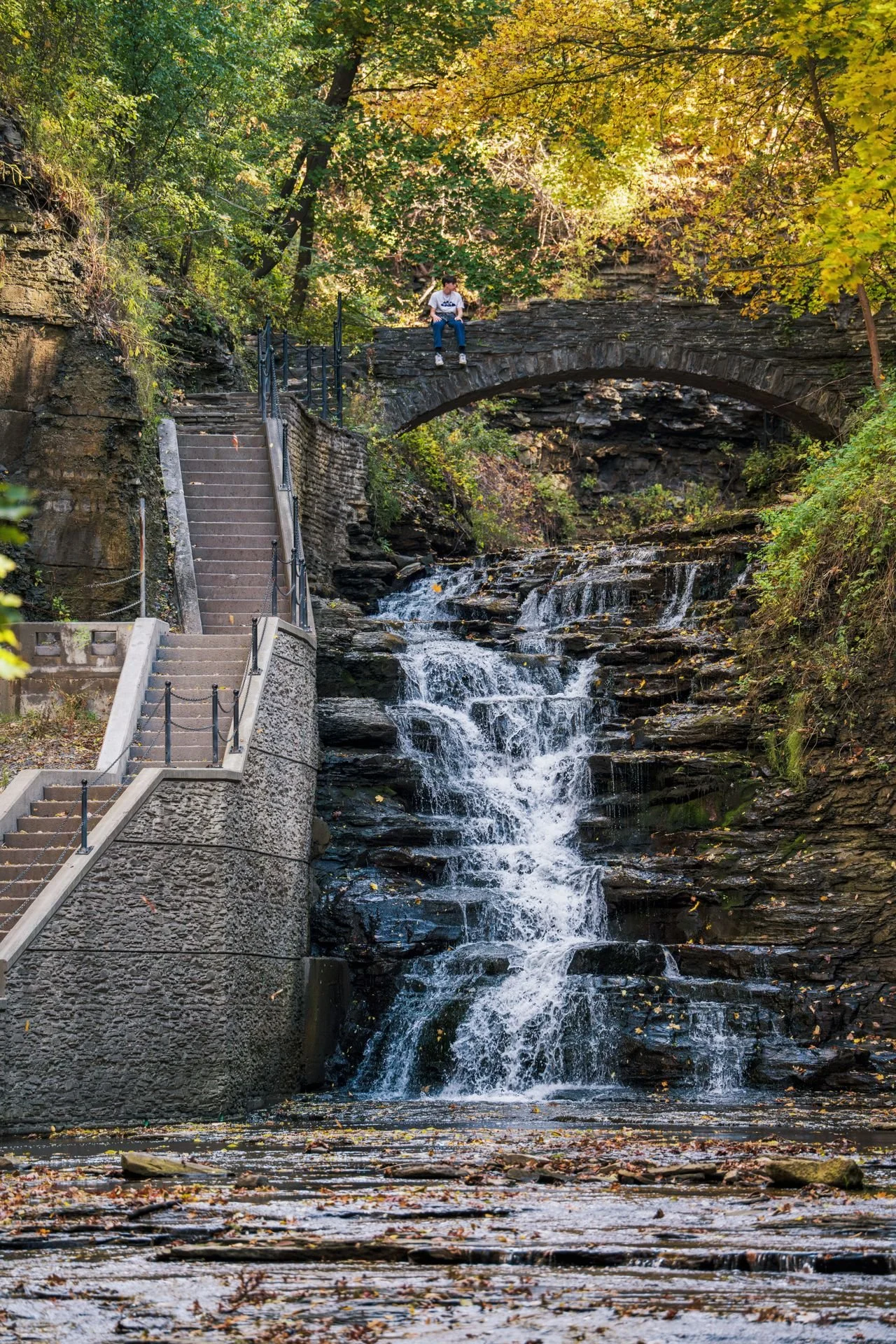
Cascadilla Gorge Trail during autumn. 2024. James Mirakian/Pexels
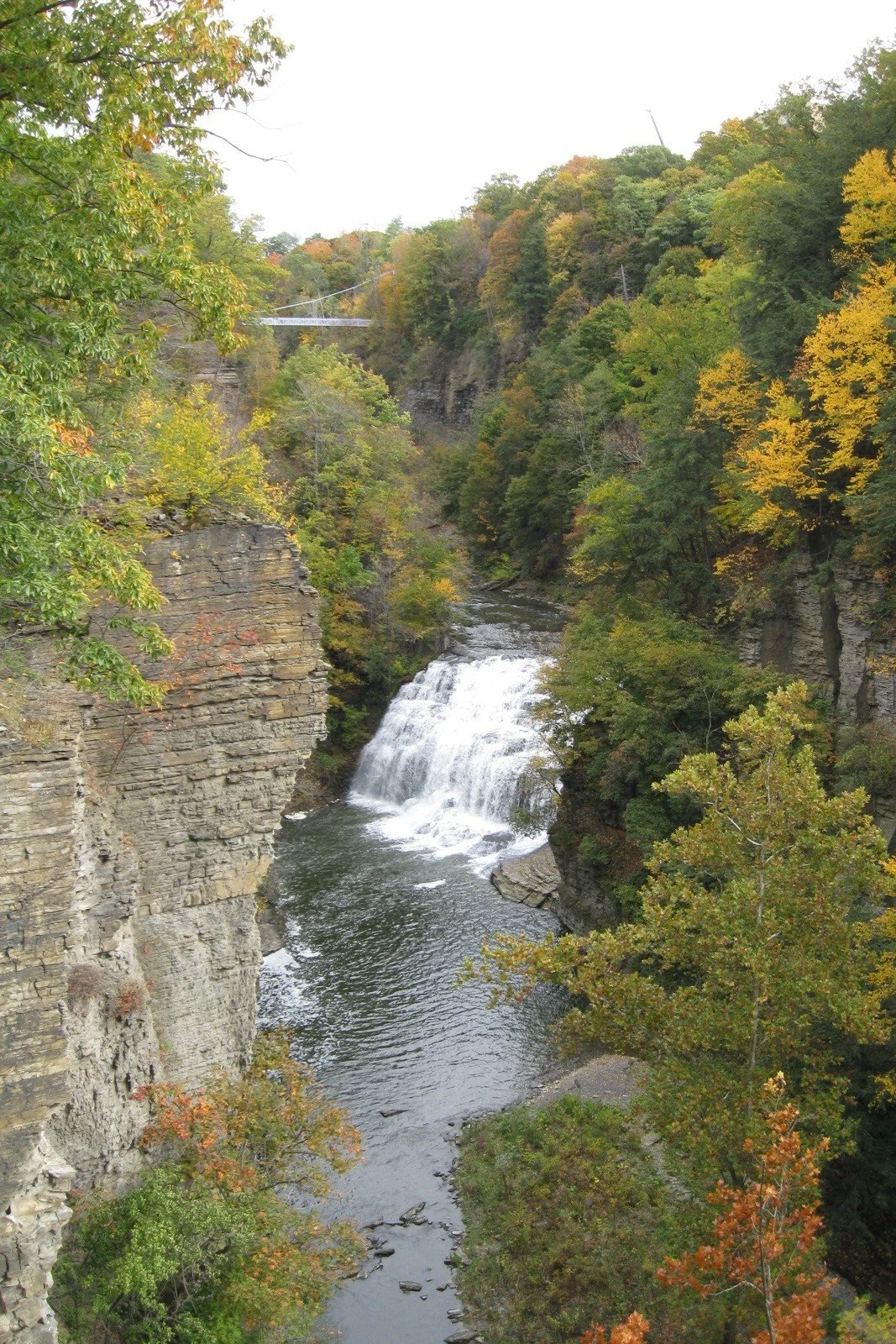
Cascadilla Gorge, Ithaca, New York. 2009. Doug Kerr/Flickr
Cascadilla Gorge: Nature in the Heart of the City
Perhaps nowhere else in America can visitors walk from a bustling downtown directly into such a dramatic natural landscape. Connecting downtown Ithaca to Cornell University, Cascadilla Gorge Trail follows Cascadilla Creek through a stunning series of waterfalls, stone bridges, and steep canyon walls.
The trail climbs approximately 400 feet in elevation, passing six major waterfalls along the way. Students use it as a scenic shortcut between campus and downtown, while visitors discover one of Ithaca's hidden gems.
Towering cliffs lined with ferns, moss, and wildflowers create an almost enchanted atmosphere. It’s difficult to believe that restaurants, cafés, and city streets lie only a few minutes away.
The gorge perfectly captures what makes Ithaca so unique.
Nature isn't separated from the city. It’s woven into everyday life.
Cornell Botanic Gardens: A Living Museum
Adjacent to campus lies another hidden gem, the Cornell Botanic Gardens. The Botanic Gardens encompass more than 3,500 acres of botanical collections, natural areas, forests, wetlands, and educational gardens.
Visitors can wander through herb gardens, wildflower meadows, arboretums, and quiet woodland trails while learning about native plants and ecosystems. Unlike many botanical gardens, Cornell's extends far beyond cultivated landscapes. Miles of hiking trails lead into protected natural areas that preserve the ecological diversity of the Finger Lakes.
It's an ideal destination for photographers, birdwatchers, gardeners, and anyone seeking a peaceful escape.
Ithaca College: A Creative Powerhouse
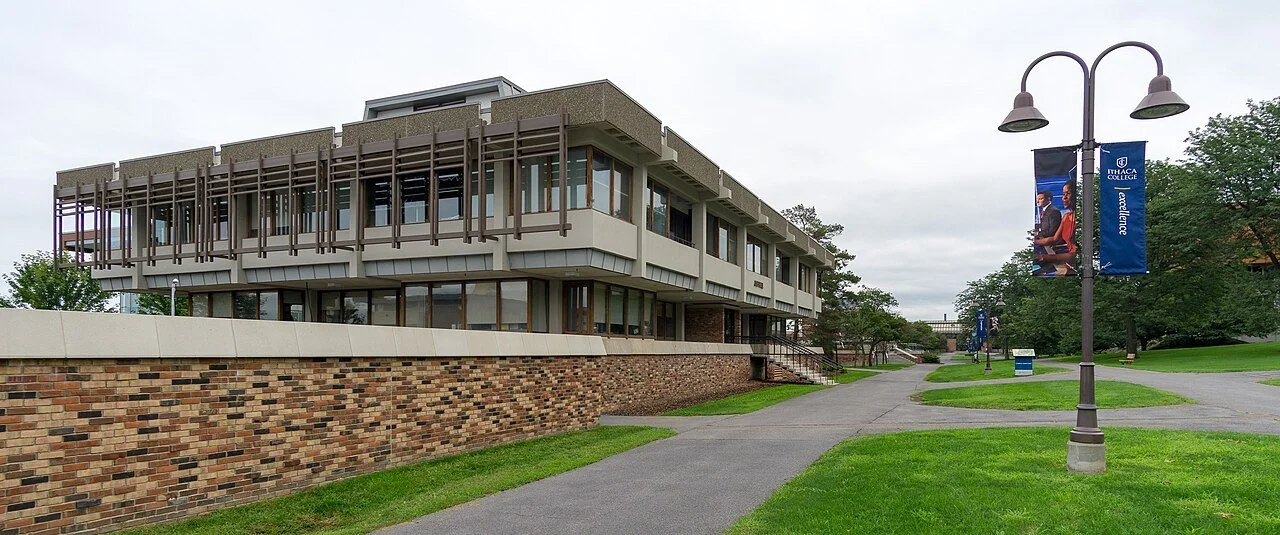
Job Hall at Ithaca College Campus. 2018. Kenneth C. Zirkel/wikimedia
While Cornell often dominates headlines, Ithaca College has established its own remarkable reputation.
Founded in 1892 as a conservatory of music, the college has grown into one of America's leading institutions for communications, journalism, music, theatre, business, physical therapy, and the performing arts.
Graduates have become award-winning journalists, broadcasters, actors, musicians, filmmakers, sports commentators, and producers.
Its nationally respected Roy H. Park School of Communications has produced professionals working for major television networks, film studios, and media organizations around the world. Together, Cornell University and Ithaca College give the city an unmistakable intellectual energy. Coffee shops buzz with conversation, bookstores remain vibrant gathering places, art galleries flourish, and live music fills local venues nearly every evening.
Education doesn't simply exist here—it defines the culture of the city.
Savoring Ithaca: One of New York's Best Food Destinations
One of the greatest surprises awaiting visitors to Ithaca is its exceptional culinary scene. Despite a population of just over 30,000 residents, the city has earned a national reputation for fresh, locally sourced cuisine, creative chefs, and an unwavering commitment to sustainable agriculture.
Surrounded by family farms, orchards, vineyards, dairies, and artisan producers, Ithaca has embraced the farm-to-table movement for decades. Here, menus change with the seasons, ingredients often travel only a few miles from field to plate, and local restaurants proudly celebrate the bounty of the Finger Lakes.
Whether you're looking for a waterfront seafood dinner, an elegant date-night destination, or a cozy café to begin your morning, Ithaca delivers a dining experience that rivals cities many times its size.
Moosewood Restaurant - No restaurant is more closely associated with Ithaca than Moosewood Restaurant. Founded in 1973, Moosewood helped revolutionize vegetarian cooking in America and gained international recognition through its award-winning cookbooks. Even devoted meat lovers often leave impressed by its imaginative seasonal dishes inspired by cuisines from around the world. Dining here isn't simply a meal—it's a piece of culinary history.
The Boatyard Grill - For spectacular waterfront dining, The Boatyard Grill remains a local favorite. Overlooking Cayuga Inlet, this lively restaurant serves fresh seafood, steaks, burgers, and regional specialties while offering beautiful views of boats drifting through the marina. Few places capture the relaxed spirit of Ithaca quite like an evening on the outdoor patio as the sun sets over the water.
Simeon's American Bistro - Located on the Ithaca Commons, Simeon's American Bistro has become a downtown institution. Its menu combines classic American cuisine with modern influences, making it an excellent choice after exploring the shops, galleries, and boutiques lining the pedestrian mall.
Mercato Bar & Kitchen - Italian-inspired cuisine takes center stage at Mercato Bar & Kitchen, where handmade pasta, wood-fired specialties, and carefully selected wines showcase the region's appreciation for fresh ingredients and authentic flavors.
Ithaca Bakery - For breakfast or lunch, few places are as beloved as Ithaca Bakery. Freshly baked breads, pastries, sandwiches, soups, and locally roasted coffee make it a favorite among students, residents, and visitors alike.
Purity Ice Cream - No visit would be complete without stopping at Purity Ice Cream, serving homemade ice cream since 1936. Its rich flavors and nostalgic atmosphere have made it a cherished Ithaca tradition for generations.
Together, these restaurants reflect Ithaca's remarkable diversity and commitment to local agriculture, making the city one of the Finger Lakes' premier culinary destinations.
The Cayuga Lake Wine Trail: America's First Wine Trail
No visit to Ithaca is complete without exploring the vineyards that have made the Finger Lakes one of the fastest-rising wine regions in North America. Just minutes from downtown, the rolling hills surrounding Cayuga Lake are blanketed with vineyards that produce internationally acclaimed wines while offering some of the most spectacular lake views in New York State.

Six Mile Creek Vineyard

Established in 1983, the Cayuga Lake Wine Trail holds the distinction of being America's first organized wine trail. What began as a collaboration among a handful of local wineries has grown into one of the country's premier wine destinations, with award-winning wineries, cideries, distilleries, and tasting rooms stretching along the shores of Cayuga Lake. The region's wineries have earned thousands of national and international awards, while the trail itself has become the model for wine trails across the United States.
The unique geography of Cayuga Lake plays an essential role in producing exceptional wines. The lake's deep waters moderate temperatures throughout the year, extending the growing season and protecting vineyards from damaging spring and autumn frosts. Combined with mineral-rich glacial soils and gently sloping hillsides, these conditions create one of the finest cool-climate wine-growing regions in North America. Riesling is widely regarded as the region's signature grape, though wineries also produce outstanding Chardonnay, Cabernet Franc, Pinot Noir, Gewürztraminer, sparkling wines, and distinctive ice wines.
One of the greatest pleasures of traveling the Cayuga Lake Wine Trail is that no two wineries feel alike. Many are family-owned estates where visitors are welcomed by the very people who grow the grapes and craft the wines, creating an experience that is both personal and authentic.
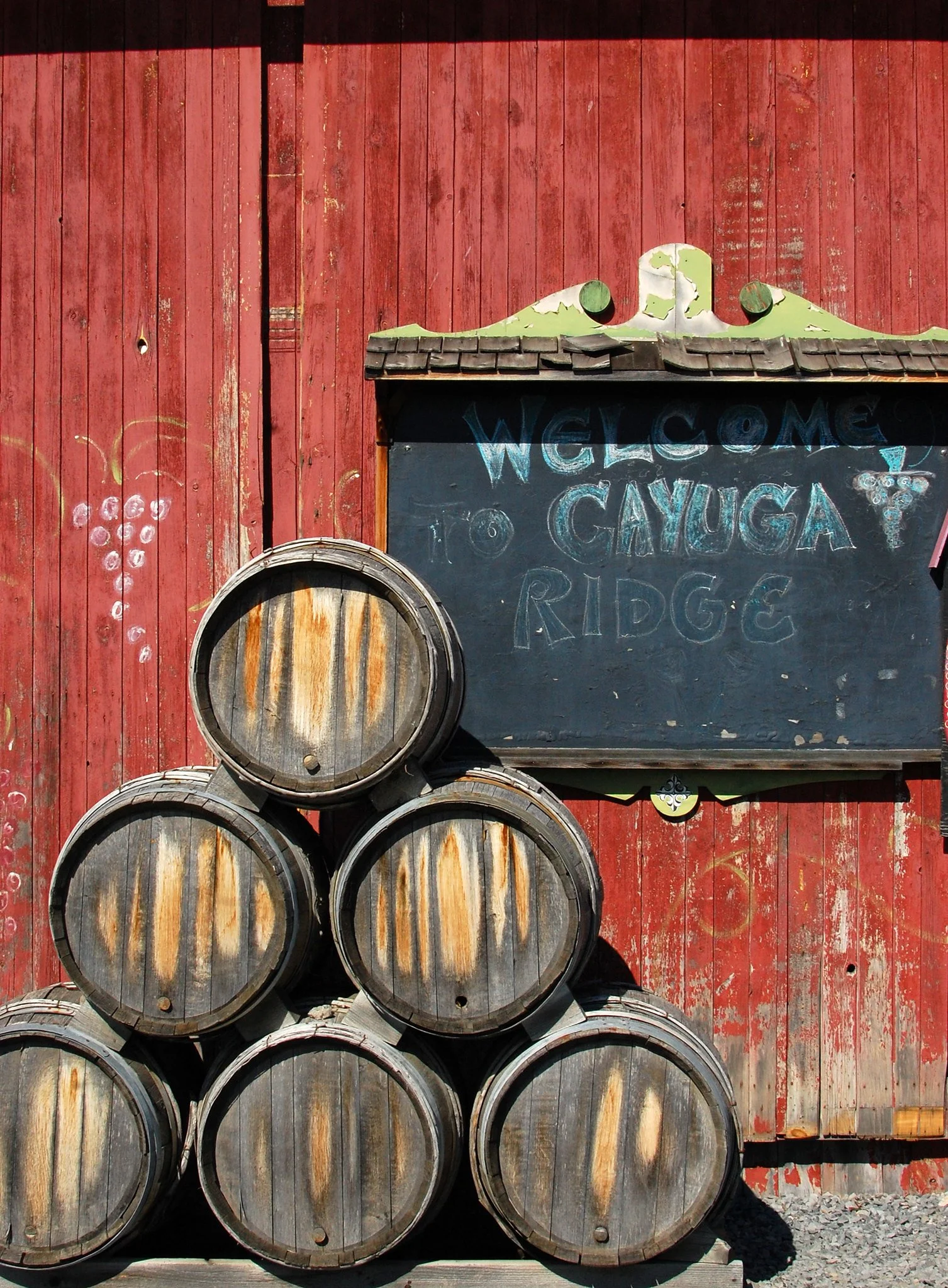
Cayuga Ride Winery on Cayuga Lake. 2010. James Willamor/Flickr
Among the closest wineries to Ithaca is Six Mile Creek Vineyard, located just minutes from downtown. Nestled in a beautifully restored nineteenth-century barn, it offers a relaxed introduction to Finger Lakes wines and is particularly well known for its Rieslings and scenic valley views.
Just north of Ithaca near Trumansburg, Bet the Farm Winery has become a favorite for visitors seeking a boutique experience, while nearby Bellwether Hard Cider and Wine Cellars showcases the Finger Lakes' growing reputation for exceptional hard ciders crafted from locally grown apples.
Further along the western shore of Cayuga Lake, visitors encounter some of the region's most celebrated wineries. Sheldrake Point Winery offers breathtaking lakefront views and elegant estate wines, while Hosmer Winery has built a reputation for producing outstanding estate-grown Rieslings and Cabernet Francs. Just down the road, Thirsty Owl Wine Company combines award-winning wines with a popular lakeside bistro, making it an ideal stop for lunch overlooking Cayuga Lake.
Wine lovers should also consider visiting Lucas Vineyards—recognized as Cayuga Lake's first winery—along with Knapp Winery, Buttonwood Grove Winery, Six Eighty Cellars, and Frontenac Point Vineyard & Estate Winery. Each offers its own interpretation of Finger Lakes winemaking, from crisp dry whites and elegant reds to sparkling wines and small-batch specialty vintages.
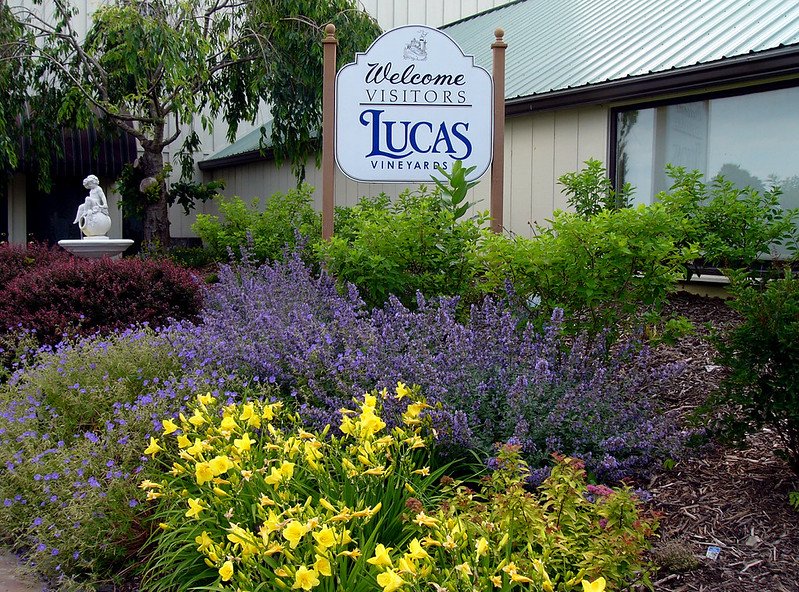
Lucas Vineyard. 2007. Kathleen Conklin/Flickr
Not every memorable wine experience requires leaving the city. Wine enthusiasts can also visit Ports of New York Winery, an intimate urban winery known for its handcrafted dessert and fortified wines as well as its fascinating collection of historic winemaking artifacts.
Whether you're planning an afternoon tasting or a leisurely weekend exploring vineyard after vineyard, the Cayuga Lake Wine Trail perfectly complements everything else Ithaca has to offer. Pair a morning hike through Taughannock Falls State Park with an afternoon overlooking the vineyards, or conclude a day exploring Cornell University by watching the sunset from a winery terrace with a glass of locally crafted Riesling in hand.
In the Finger Lakes, exceptional wine is more than a beverage—it's part of the landscape, the history, and the culture. For many visitors, the wineries of Cayuga Lake become one of the most unforgettable highlights of an Ithaca getaway.
Where Waterfalls, History, and Ivy League Excellence Meet
At first glance, Ithaca may appear to be a charming college town nestled at the southern tip of Cayuga Lake. Spend a little time here, however, and you quickly realize it is something much greater.
It’s a destination shaped by glaciers over thousands of years, enriched by the traditions of the Cayuga people, transformed by visionary educators, and sustained by a community that values creativity, environmental stewardship, and lifelong learning.
Its waterfalls remind us of nature's incredible power. Its universities demonstrate the limitless potential of human curiosity. Its festivals celebrate the bonds of community, while its restaurants and wineries showcase the abundance of the Finger Lakes.
Whether you're hiking beneath the towering cliffs of Robert H. Treman State Park, gazing up at the breathtaking drop of Taughannock Falls, wandering the vibrant Ithaca Commons, strolling across Cornell's suspension bridge, or watching the sunset over Cayuga Lake with a glass of local wine in hand, one thing becomes clear:
Ithaca is not simply a destination—it is an experience.
It's a place that invites exploration, rewards curiosity, and leaves visitors inspired long after they've returned home.
For those seeking one of New York State's most extraordinary travel destinations, few places compare to the timeless beauty, vibrant culture, and welcoming spirit of Ithaca and the Finger Lakes.

On the Cayuga Wine Trail