

Park Slope, Brooklyn
When Nature Meets Architecture
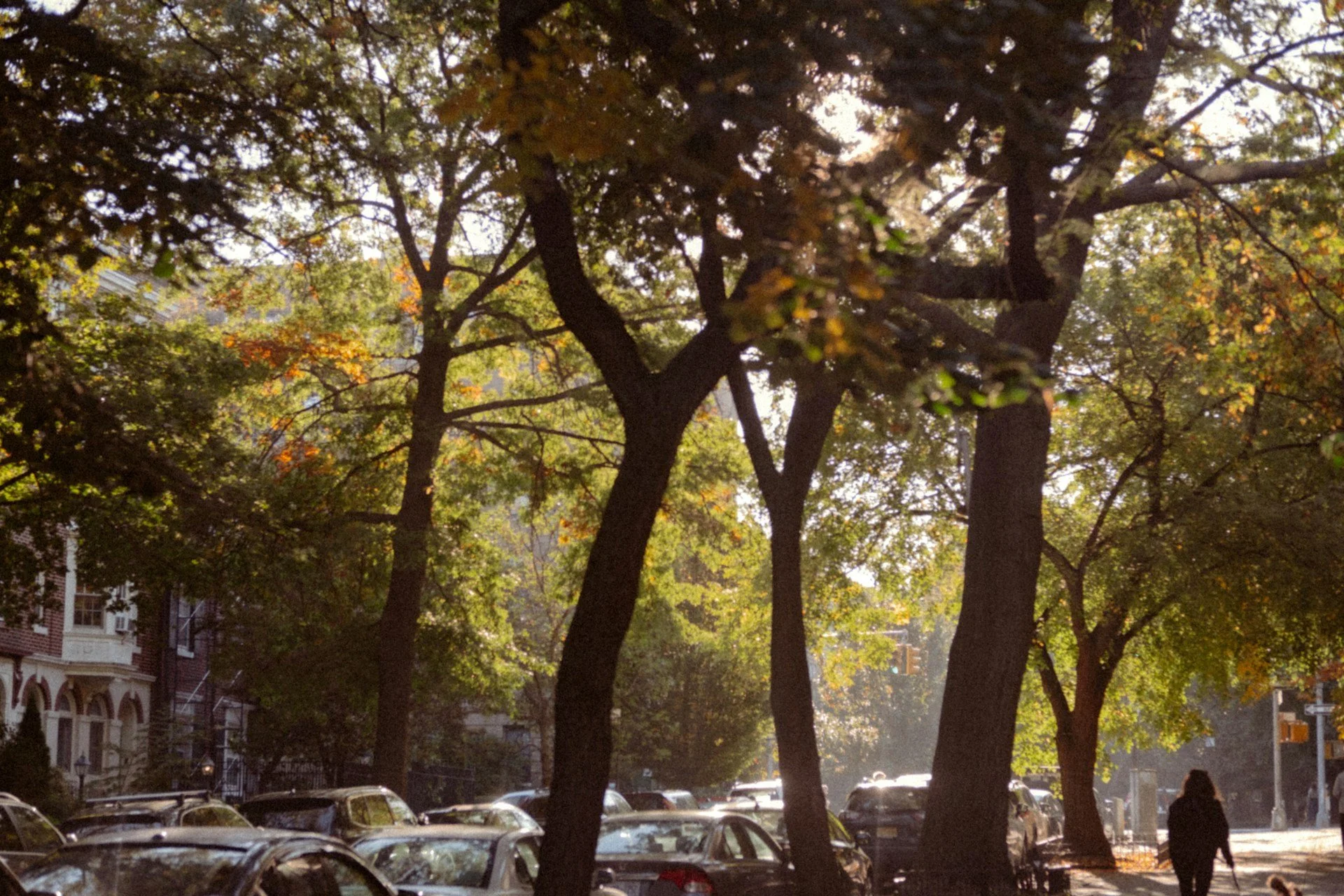
Autumn Day in Park Slope, Brooklyn. 2023. Ashe Walker/Unsplash
Park Slope is often described as the “quintessential Brooklyn neighborhood,” and for good reason. It has Some of the best-preserved historic homes in America, a vibrant cultural community anchored by world-class institutions, direct access to Prospect Park — one of the nation’s greatest landscaped parks, and a neighborhood identity that balances city life with suburban calm.
Beneath its modern popularity lies a story nearly 200 years in the making. Park Slope was originally farmland which transformed during the Industrial Revolution, evolving into one of America’s most affluent residential neighborhoods. When Prospect Park opened in the 1860s, wealthy families sought refuge along its borders, building ornate mansions and brownstones that still stand today. By the late 19th century, Park Slope was widely recognized as one of the wealthiest neighborhoods in the United States. A legacy that shaped its architecture, landscape, and cultural prestige.
Today, Park Slope is family-friendly, artistic, intellectual, and beautifully preserved—a living museum of Brooklyn’s past with all the conveniences of modern urban life.
the Architectural History of Park Slope
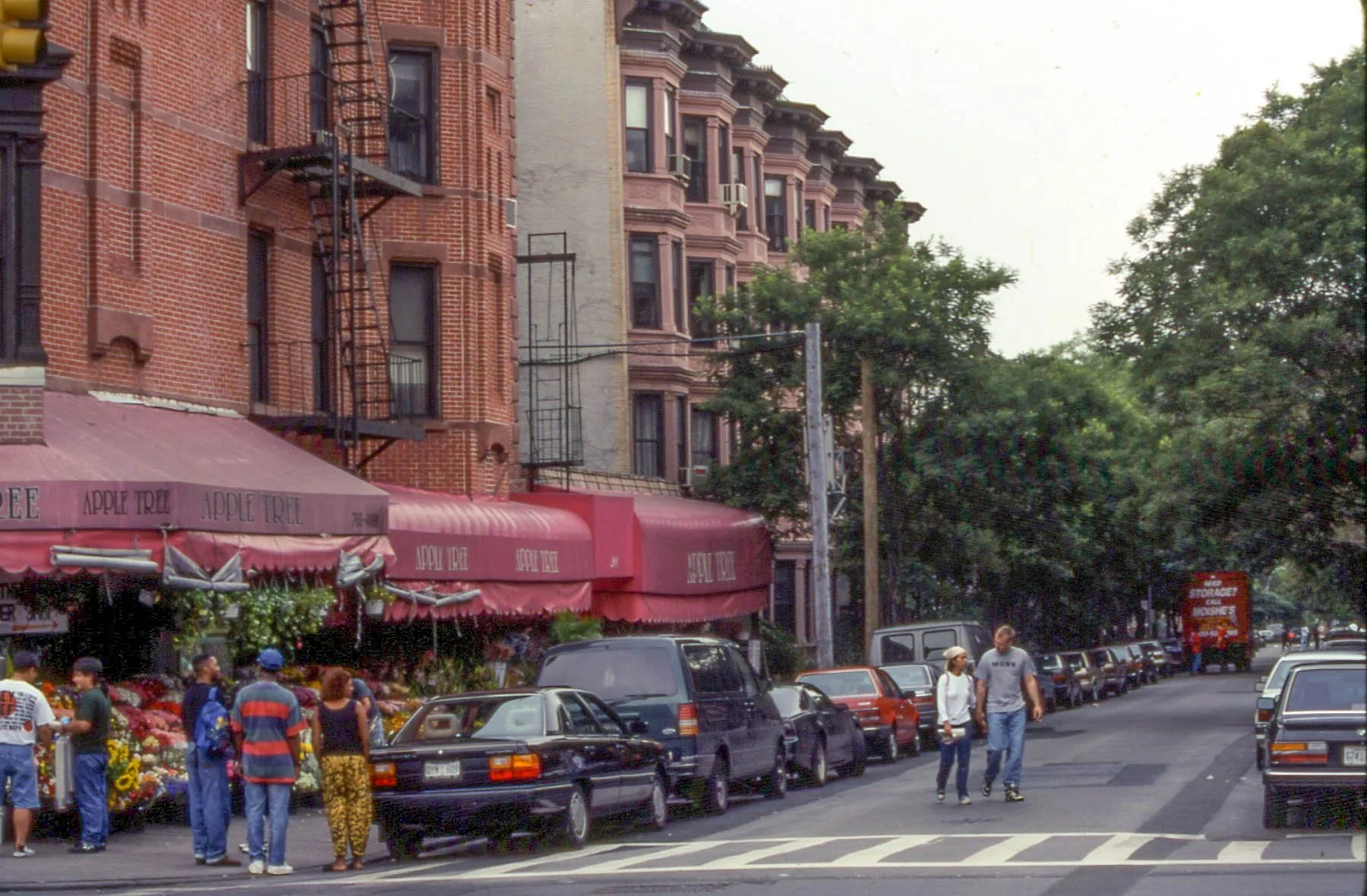
Neighborhood Walk through Park Slope, Brooklyn. 2011. David Wilson/Flickr
Park Slope is an open-air textbook for anyone studying American architecture. The Brooklyn neighborhood is a district of more than 1,500 historic buildings, preserving one of the largest classic quarters in the nation. When taking a walking tour, you’ll encounter 19th-century brownstones, Romanesque Revival and Neo-Grec row houses, Italianate mansions, early 20th-century apartment buildings, and unique landmarks like the Montauk Club, Litchfield Villa, and the Co-Cathedral of St. Joseph.
These buildings were constructed during Brooklyn’s golden era. A period within New York City when streets were illuminated by gas lamps and horse-drawn carriages ran along the avenues. It was also the early days of the Brooklyn Bridge, where Brooklyn and Manhattan created a vital transportation route between the boroughs. The Brooklyn Bridge was the first fixed crossing along the East River, allowing upper-class families to migrate outside of the growing city center into quieter neighborhoods.
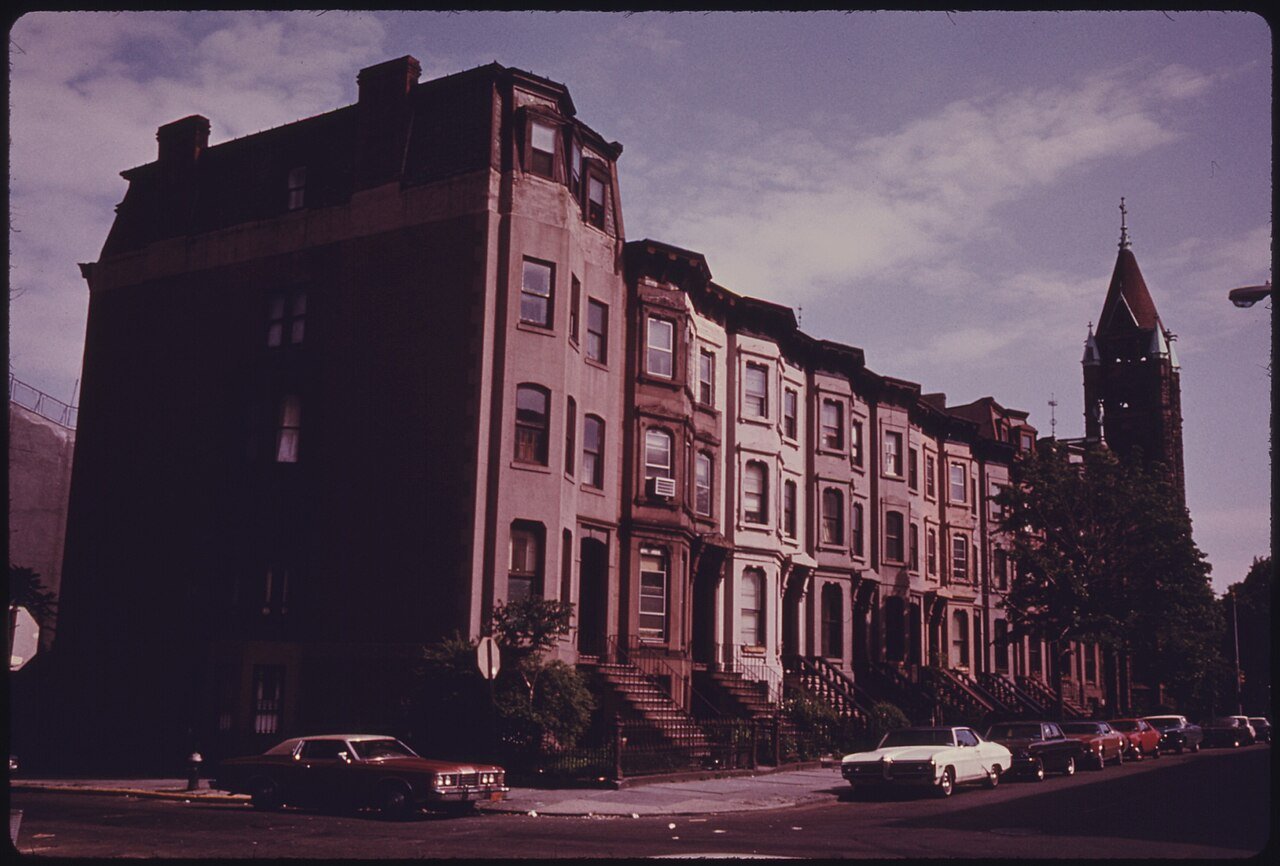
"Block of Brownstones", Park Slope, Brooklyn. 1974. Danny Lyon/Library of Congress
The Montauk Club: A Venetian Palace in Brooklyn
Completed in 1889, the Montauk Club is one of Park Slope’s architectural crown jewels. Modeled after Saint Mark's Campanile and Palazzo Ducale in Venice, the building features intricate stained glass, carved mahogany interiors, gothic arches, quatrefoils and sculptural ornamentation. Once an exclusive social club, it now welcomes visitors as one of the neighborhood’s most recognizable landmarks.
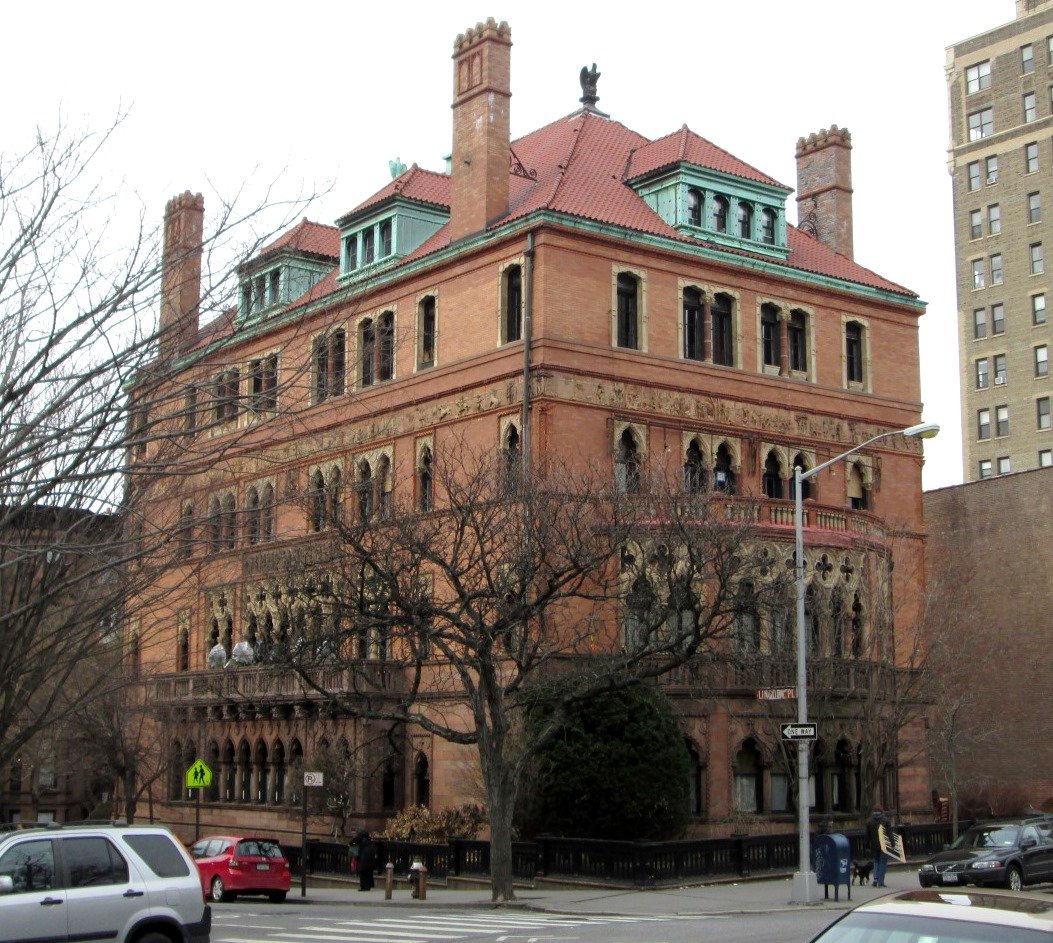
"Montauk Club", Park Slope, Brooklyn. 2013. Beyond My Ken/Wikimedia
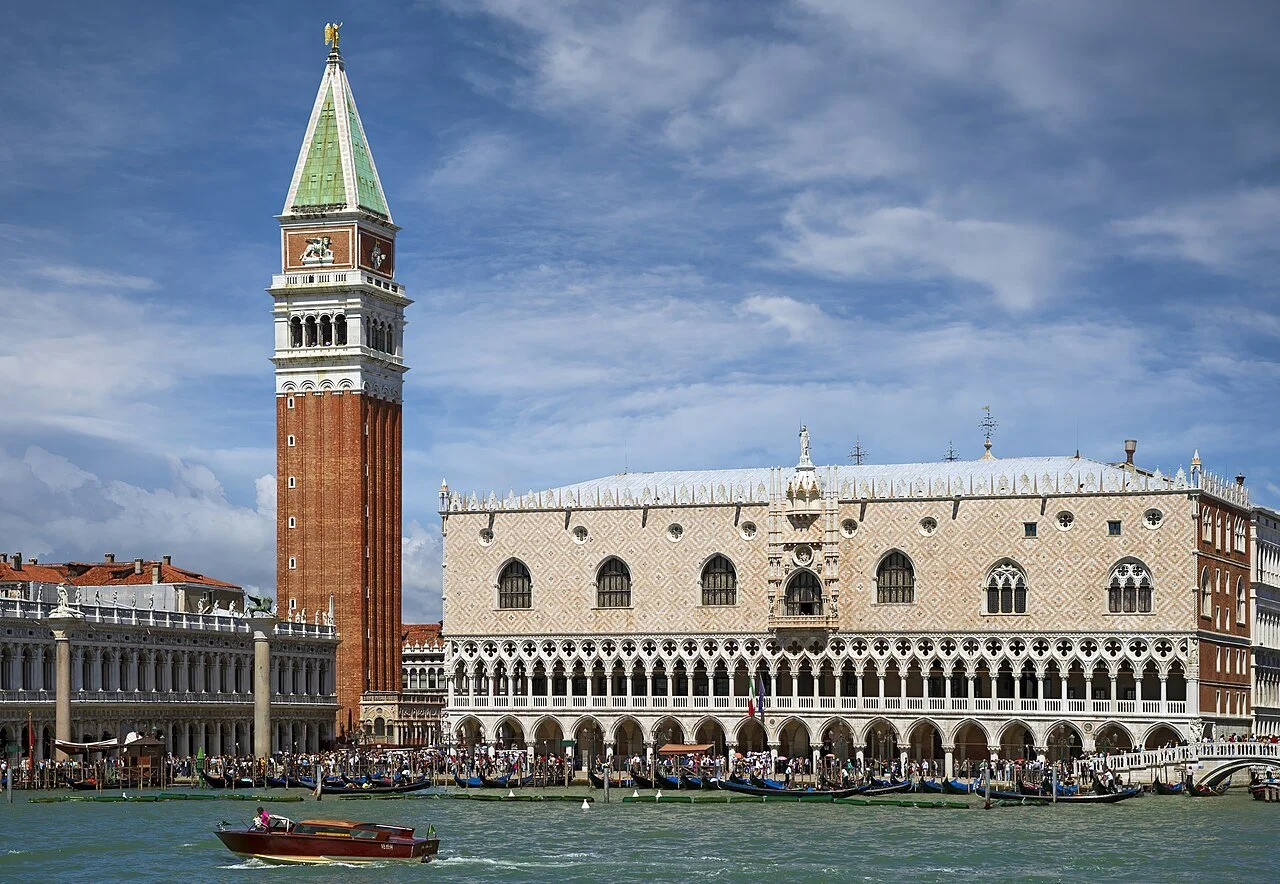
"Campanile of St. Mark's Basilica facing the sea", Venice, Italy. 2012. Didier Descouens/Wikimedia
The Old Stone House
A replica of the 1699 Vechte-Cortelyou House, the Old Stone House marks the site of one of the most dramatic moments of the Revolutionary War: the Maryland 400’s heroic stand during the Battle of Brooklyn.
This single landmark connects Park Slope to America’s fight for independence and remains a symbol of sacrifice and resilience.
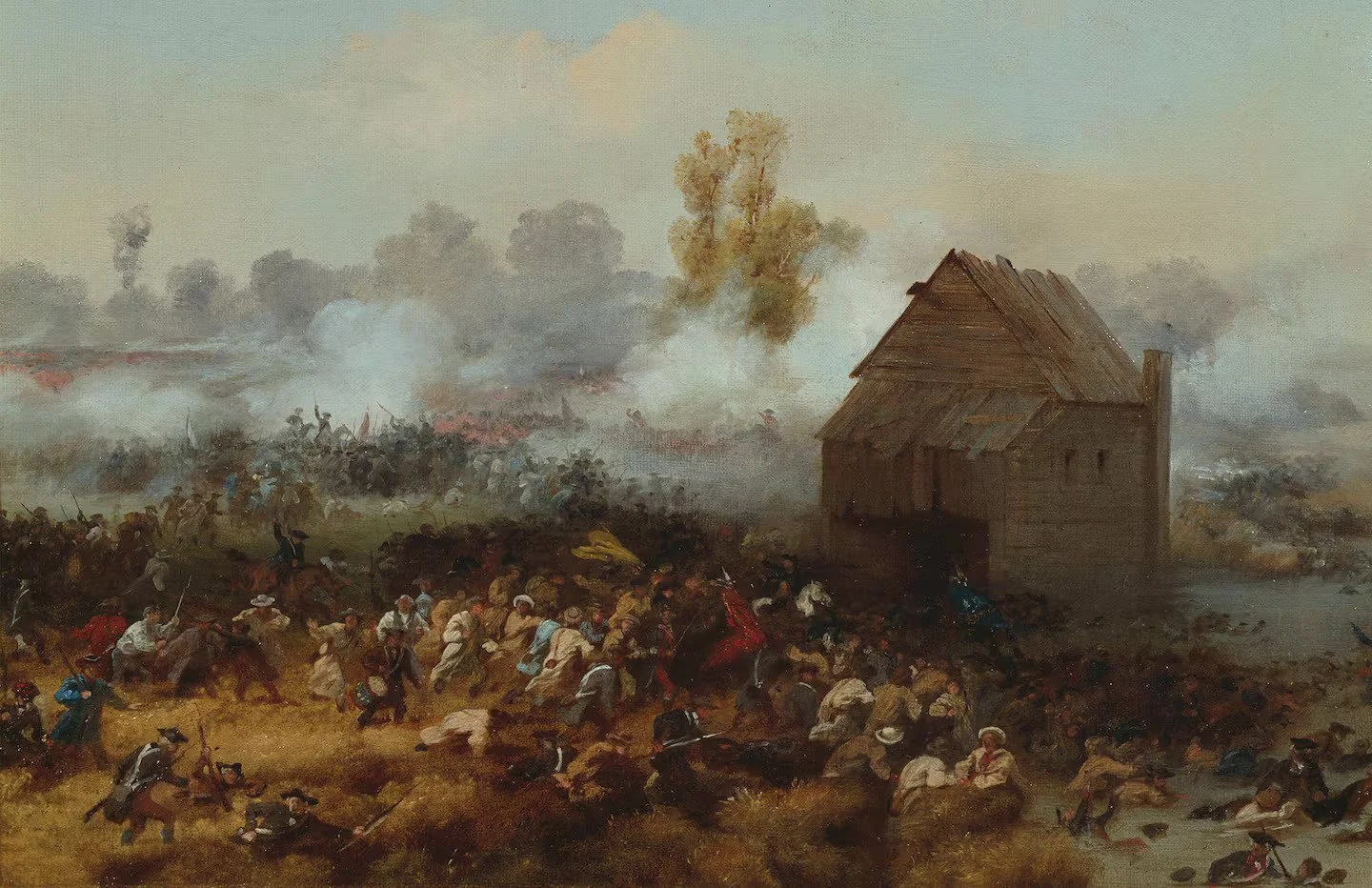
"Battle of Long Island", Park Slope, Brooklyn. 1858. Alonso Chappel/Wikimedia
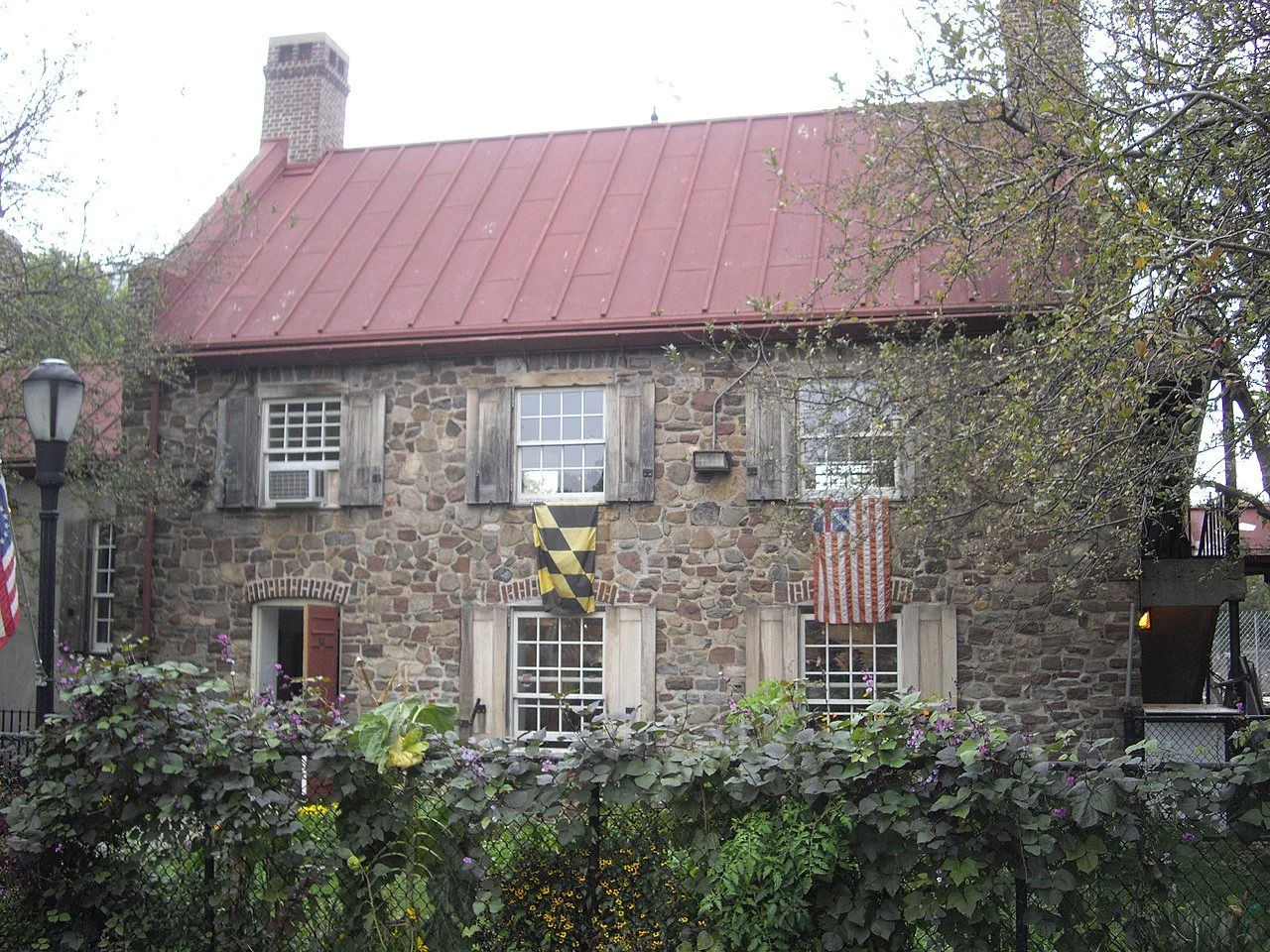
"Old Stone House", Park Slope, Brooklyn. 2008. Dmadeo/Wikimedia
Exploring Brooklyn’s Gem: Prospect Park
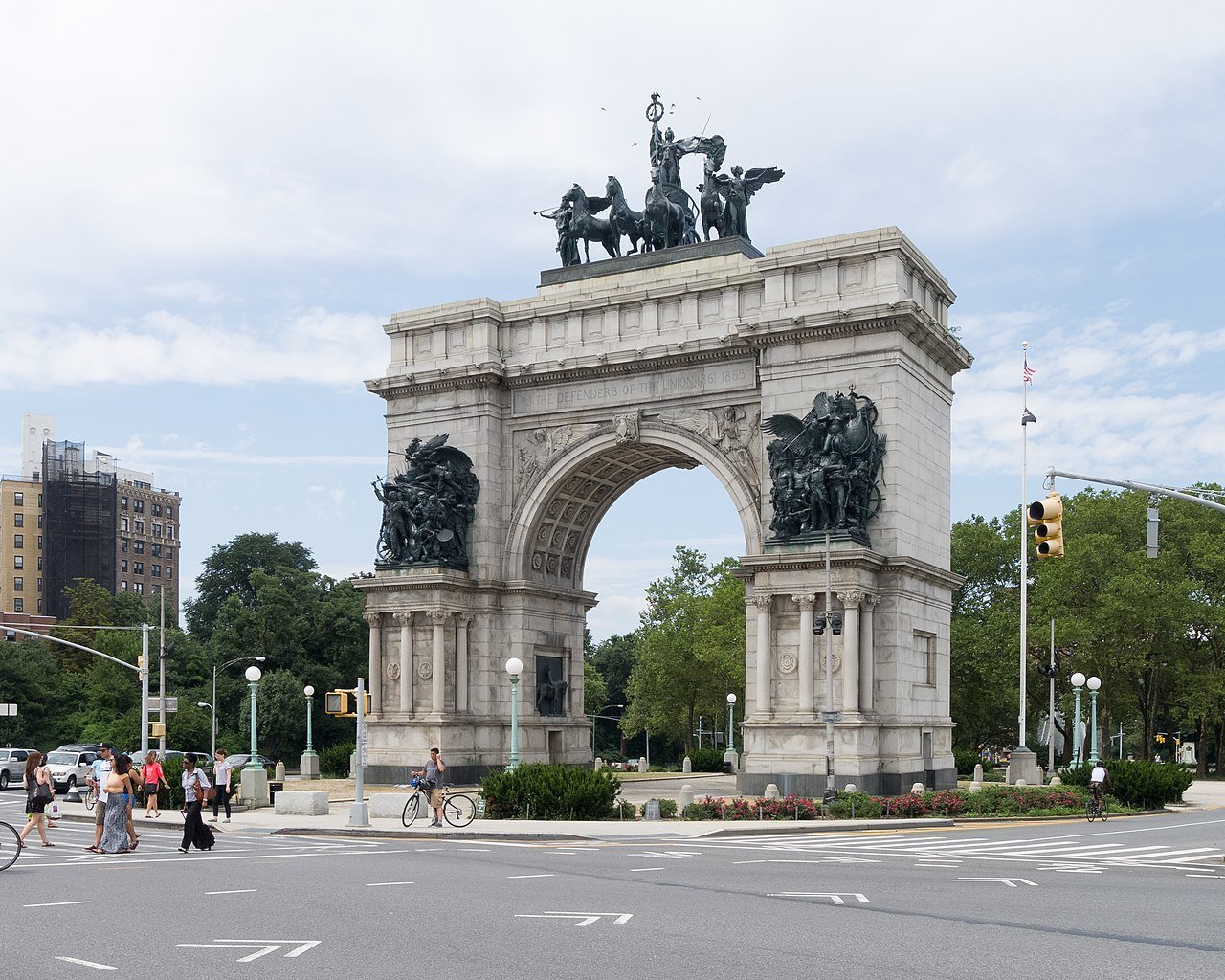
Grand Army Plaza. Ryan Sylvester/Pexels
Designed by Frederick Law Olmsted and Calvert Vaux, the masterminds behind Central Park, Prospect Park represents the pair’s refined vision of a perfect urban landscape. Many historians refer to Prospect Park as Olmsted’s true masterpiece. It contains:
A more controlled, immersive landscape than Central Park.
Brooklyn’s only freshwater lake (nearly 60 acres).
The design embraces rolling hills, winding paths, and expansive meadows as its topography was intentionally shaped to evoke rural peace.
Brooklyn’s only remaining natural forest. Many areas of Brooklyn have completely lost their forest due to the impacts of urban development, neglects of a rapidly developing urban environment, and the events of the Revolutionary War.
When the park opened in 1867, Brooklyn was the third-largest city in America and residents sought an escape from industrial life. Prospect Park became the space for recreation, relaxation, and cultural expression. It’s a living ecosystem—dynamic, timeless, and central to the identity of Brooklyn.
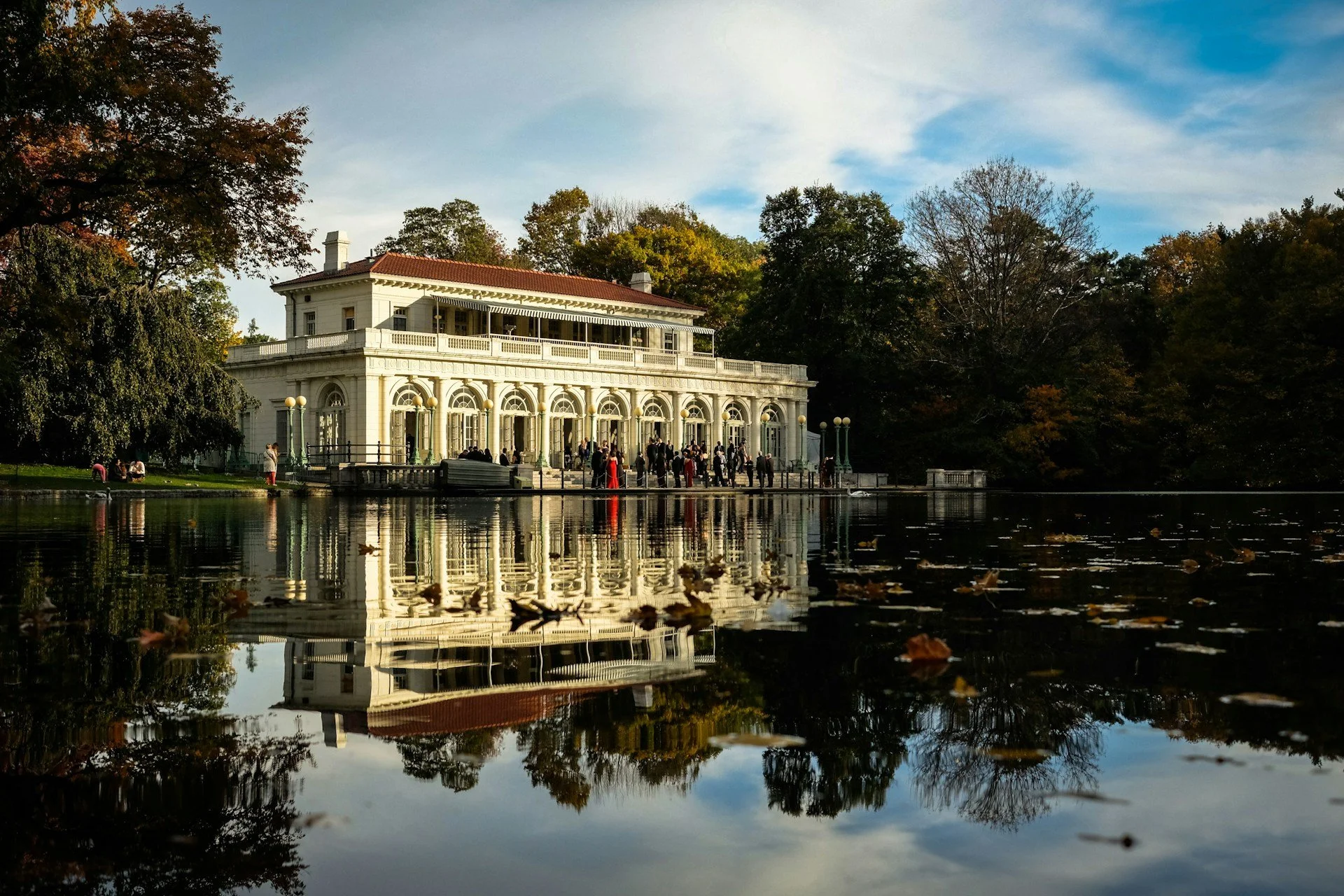
Prospect Park Boathouse. Tyler Goodell/Unsplash
Fun & Interesting Facts
Prospect Park was built before Brooklyn was part of New York City. Brooklyn was an independent city until 1898.
The Maryland 400 fought here during the Battle of Brooklyn, holding off thousands of British troops.
Grand Army Plaza contains the first parkway ever built in the United States: Eastern Parkway.
The park’s Long Meadow is one of the largest uninterrupted meadows in an American urban park.
The Boathouse was nearly demolished in the 1960s before preservationists saved it.
The Brooklyn Botanic Garden began as a city dumping ground before becoming an oasis of horticulture.
A Horticulturalist Dream
The landscape surrounding Park Slope, Prospect Park, and the Brooklyn Botanic Garden is one of the richest horticultural zones in New York City.
1. The Brooklyn Botanic Garden is a living museum with:
14,000+ plant species, Over a century of botanical research, The stunning Japanese Hill-and-Pond Garden, The Magnolia Plaza, The Lily Pool Terrace, and one of the oldest bonsai collections in the country.
2. Prospect Park Includes:
Mature forests, Meadow lands, The Vale of Cashmere, Unique micro-climates created by Olmsted & Vaux.
3. Park Slope’s Streets are Lined with:
London plane trees, Flowering magnolias, Dogwoods, Cherry blossoms, Pocket gardens maintained by residents.
Together, they create one of New York’s greenest, most botanically diverse neighborhoods.
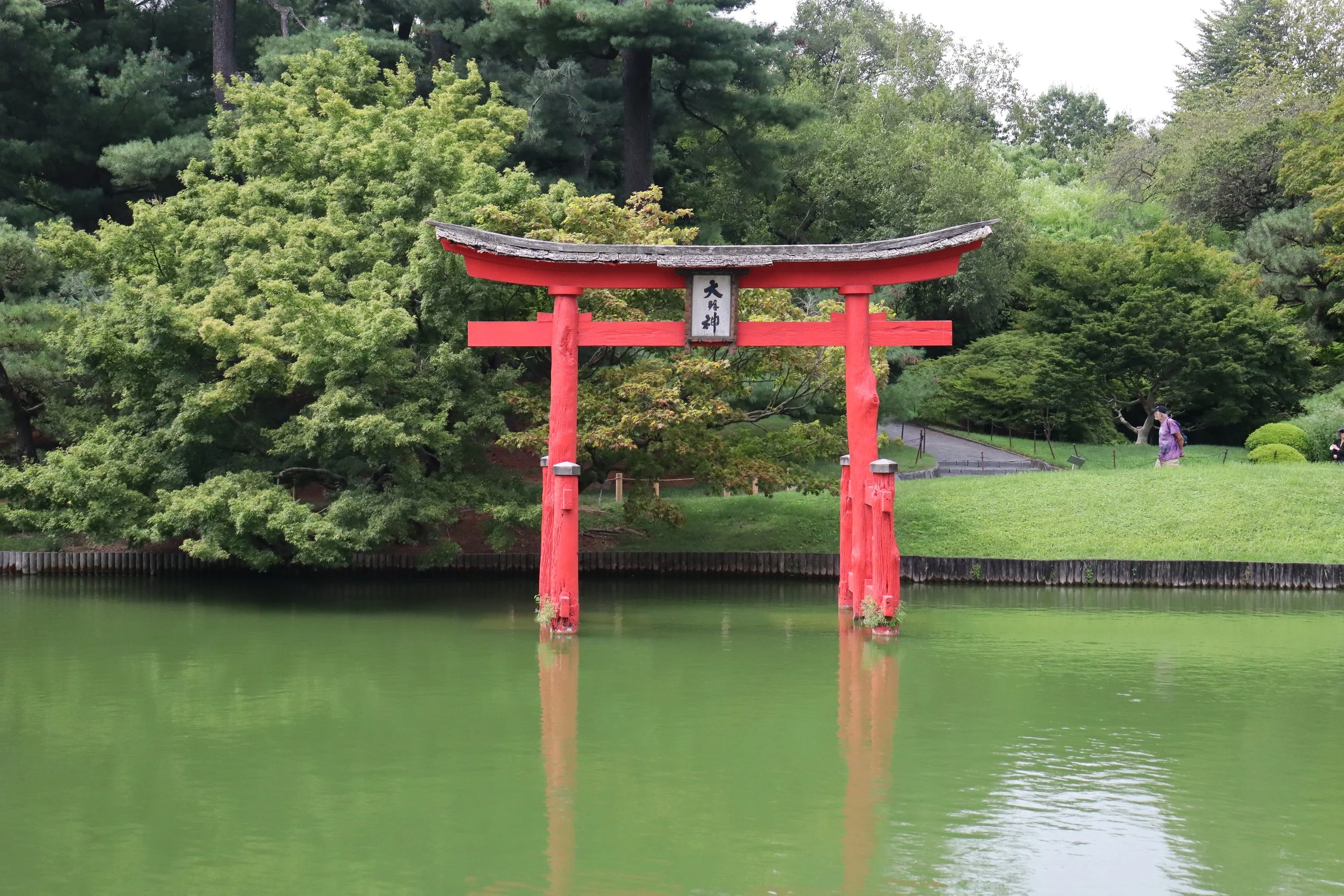
Torii Gates at the Japanese Hill and Pond, Brooklyn Botanic Garden
The Importance of the Brooklyn Botanic Garden in New York City
When the Botanic Garden opened in 1911, New York was becoming the “concrete jungle.” Civic leaders feared that industrialization would eliminate essential green space throughout the city. The garden was founded to preserve nature, advance botanical science, educate the public, and provide a sanctuary for urban residents. Today, it remains one of the city’s most visited attractions, welcoming more than 800,000 visitors annually. It serves as a research institution and horticultural sanctuary. From its Japanese garden to the Aquatic House, every corner celebrates the relationship between people and nature.
The Brooklyn Museum
Located beside the Botanic Garden, the Brooklyn Museum stands as a cultural pillar of the borough. It holds one of America’s largest Egyptian art collections, an expansive Asian, Islamic, and Middle Eastern art collection, a groundbreaking collection of African and African-American art, Contemporary works from artists shaping modern culture, sculptures, paintings, and artifacts spanning 6,000 years. Its Beaux-Arts architecture, skylit court, and dynamic exhibitions reflect Brooklyn’s creative soul. The museum bridges every corner of world culture.
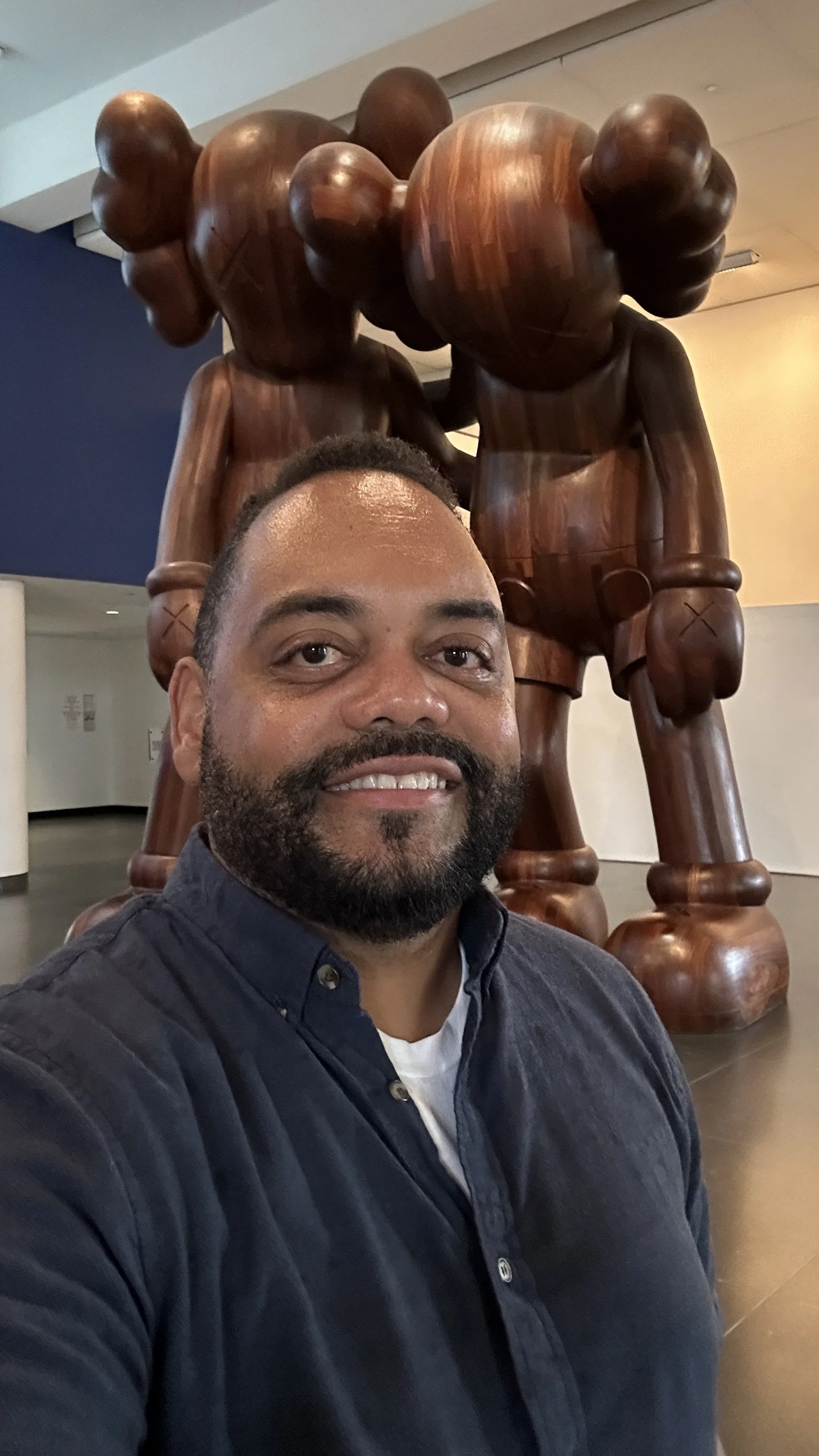
Exploring the exhibits at the Brooklyn Museum
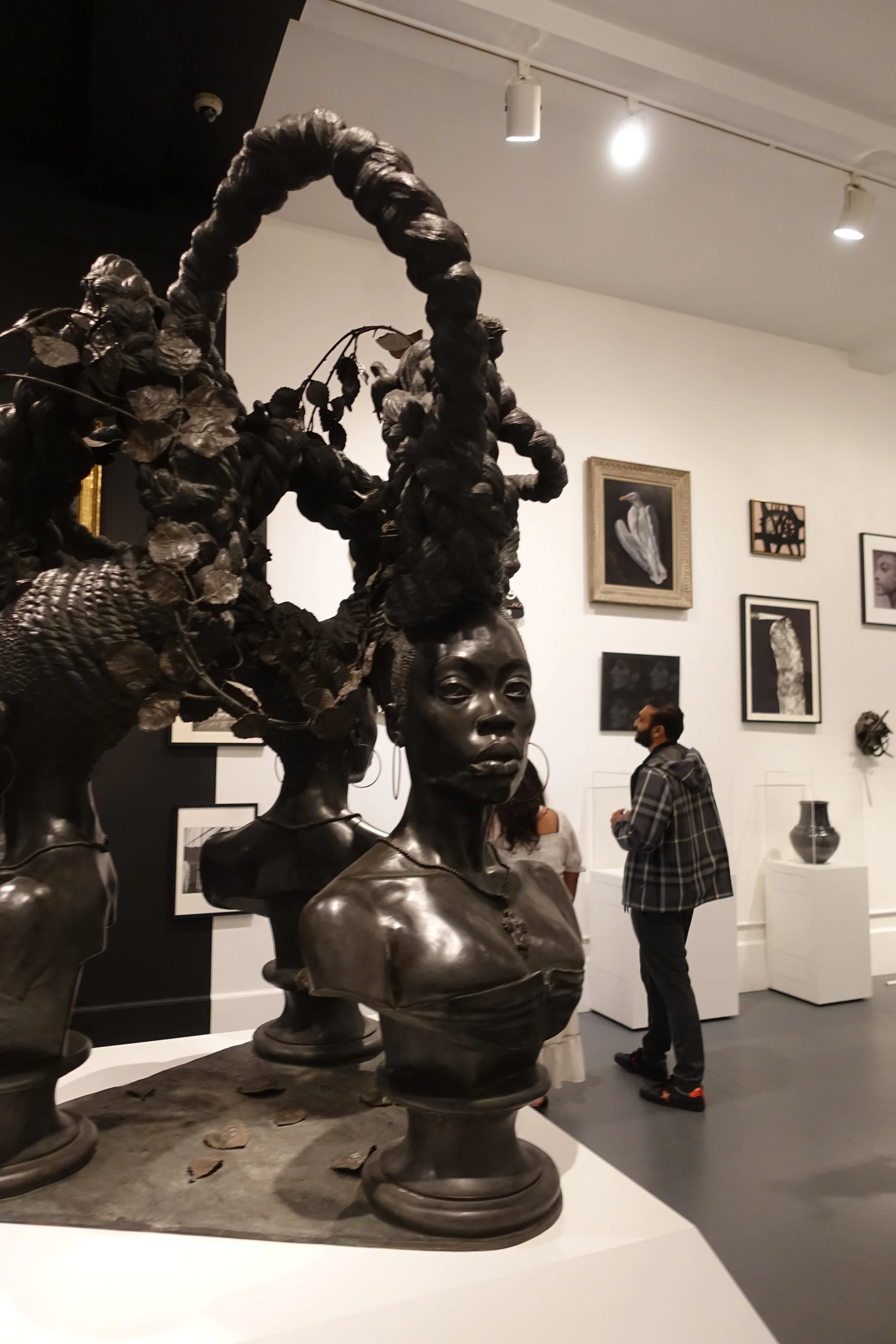
”Bound” by Kehinde Wiley
Top 10 Things to Do in Park Slope & Prospect Park
Here are the must-visit attractions and experiences:
1. Stroll Through Park Slope’s Brownstone Streets
Between 5th and 8th Avenues, you’ll find some of the best-preserved row houses in America.
Admire its Venetian Gothic architecture and learn about its role in Brooklyn’s social history.
3. Explore the Old Stone House
A powerful Revolutionary War landmark set within Washington Park.
4. Wander Through Prospect Park
Brooklyn’s largest landscaped park, offering lakes, forests, meadows, and historic monuments.
A world-class horticultural museum featuring lily pools, Japanese gardens, magnolia groves, and more.
Home to 140,000 objects spanning 6,000 years—one of the top art museums in the country.
An architectural and civic masterpiece at the entrance of Prospect Park, featuring the Soldiers’ and Sailors’ Memorial Arch.
8. Prospect Park Boathouse
One of New York’s most enchanting Beaux-Arts buildings.
9. Concert Grove & Lincoln Monument
A tranquil area showcasing historic sculptures and reflecting pools.
10. Explore the Local Shops & Cafés on 7th Avenue
Independent bookstores, bakeries, boutiques, and brunch spots define Park Slope’s local charm.
The Historic Heartbeat of Brooklyn
Park Slope is a neighborhood that feels timeless—historic, modern, artistic, and green all at once. From its serene streets to the grandeur of Grand Army Plaza, from the quiet beauty of the Botanic Garden to the energy of the Brooklyn Museum, this area remains one of the most fascinating destinations in New York City.
Whether you're a traveler, a history lover, a photographer, or simply looking for a peaceful escape, this corner of Brooklyn offers something extraordinary:
Architecture that transports you to the late 1800s.
One of America’s greatest urban parks.
A world-class museum.
A botanic garden unlike any other in New York.
A neighborhood filled with charm, food, culture, and local life.
Park Slope and Prospect Park aren’t just places to visit—they’re places to experience, breathe in, and appreciate. They represent the perfect blend of design, history, and community spirit.
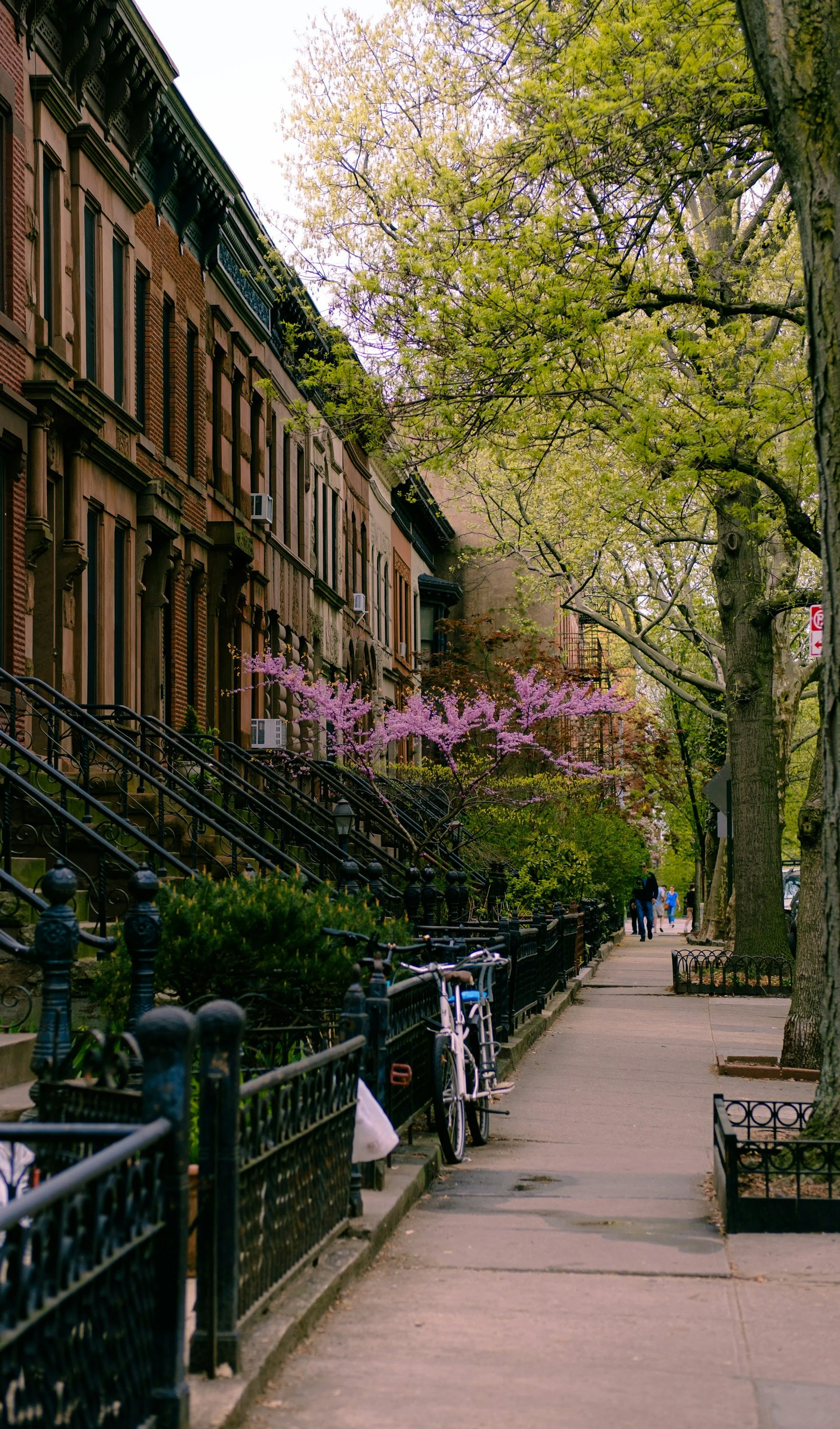
Park Slope’s Greenery. 2023. Ashe Walker/Unsplash